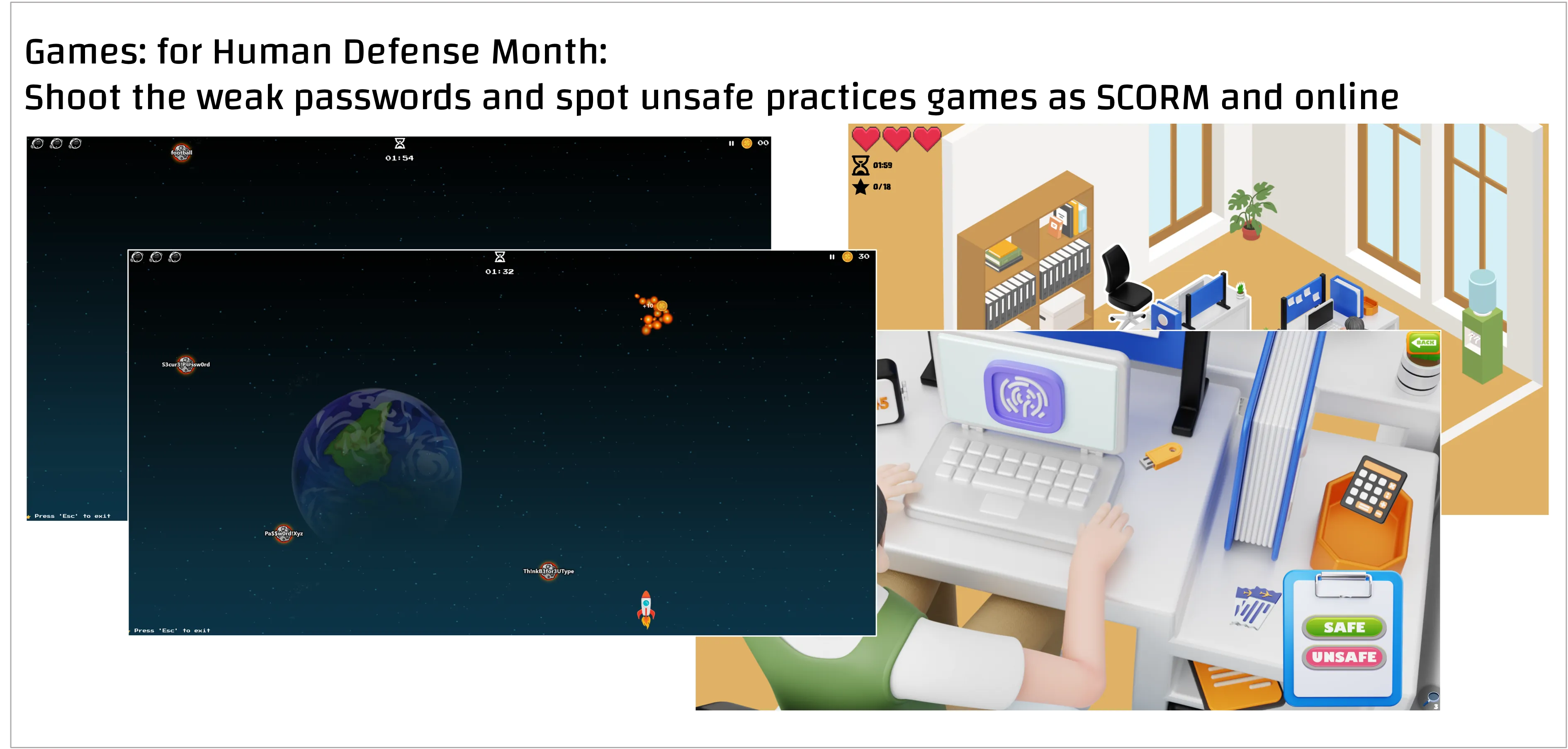
Spot unsafe behaviour. Shoot weak passwords. Two free security awareness games for Human Defense Month 2026, in English and German, to play online or import into your LMS. Because not every training needs to feel like training.
Research, guides and category thinking on Behavioral Defense.

Spot unsafe behaviour. Shoot weak passwords. Two free security awareness games for Human Defense Month 2026, in English and German, to play online or import into your LMS. Because not every training needs to feel like training.

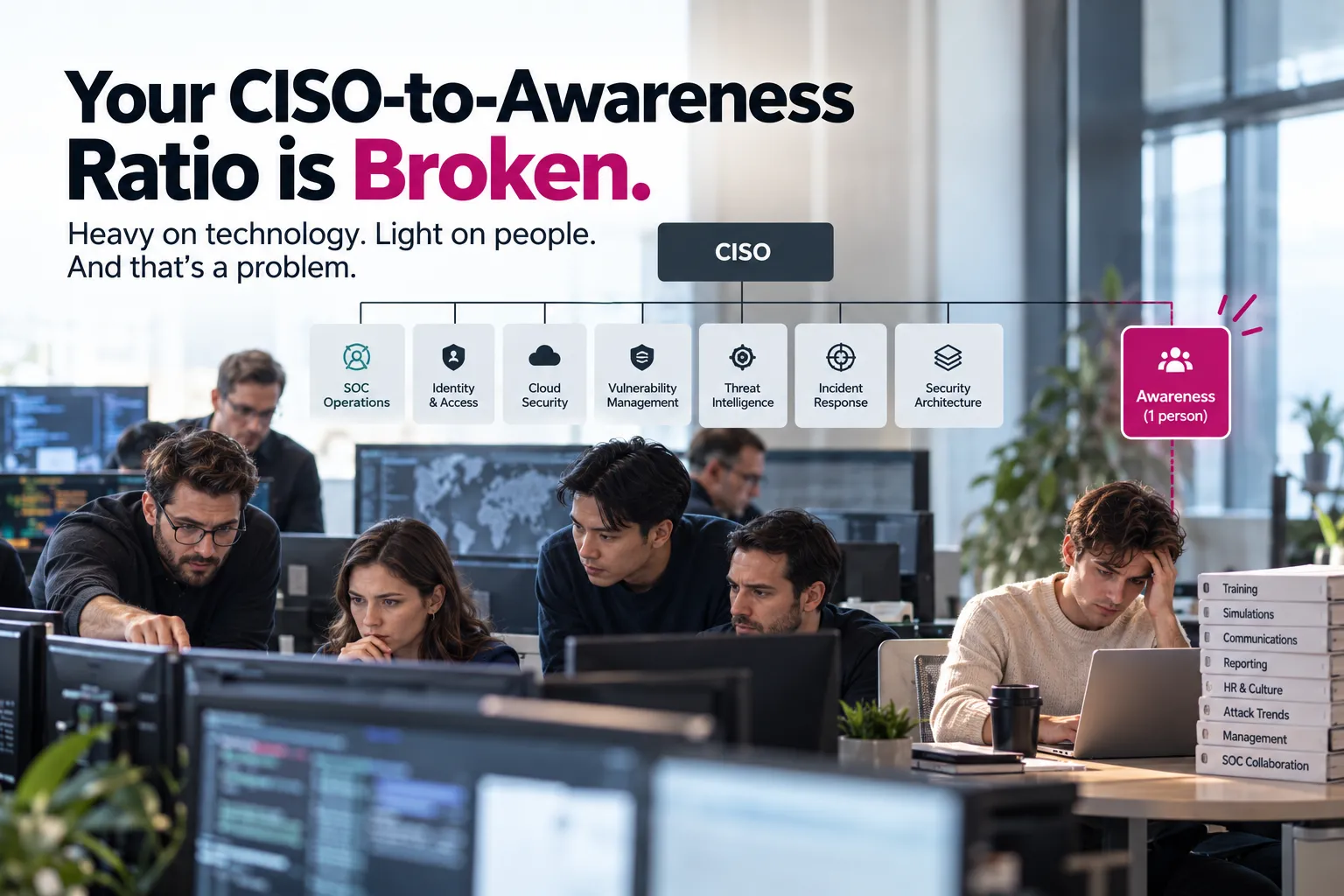
Boards spend most of their cyber time on technology. One number from the 2026 SANS Security Awareness & Culture Report works surprisingly well as a management indicator: a cybersecurity staffing ratio of at least one human-focused professional for every ten technical ones.

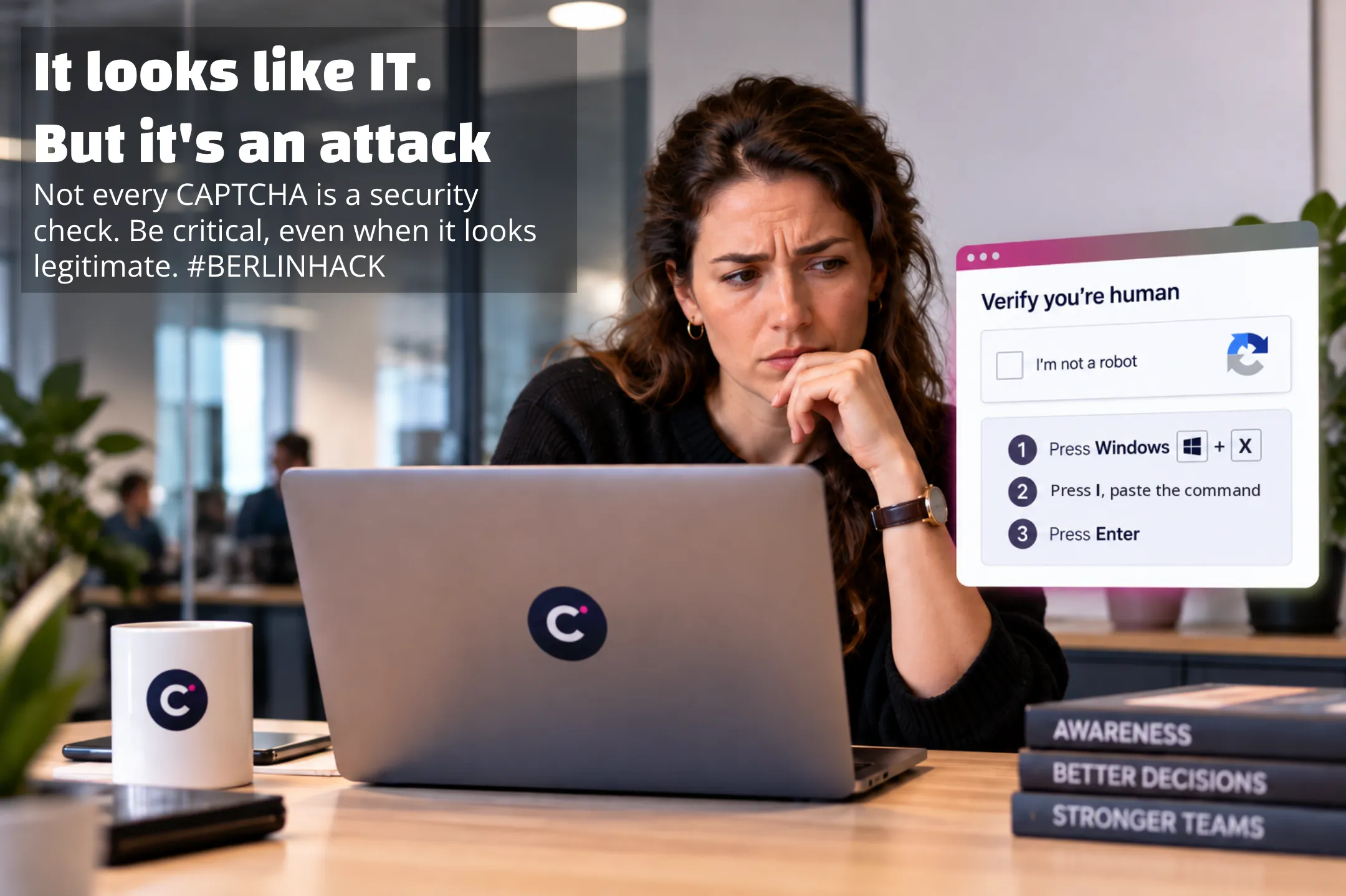
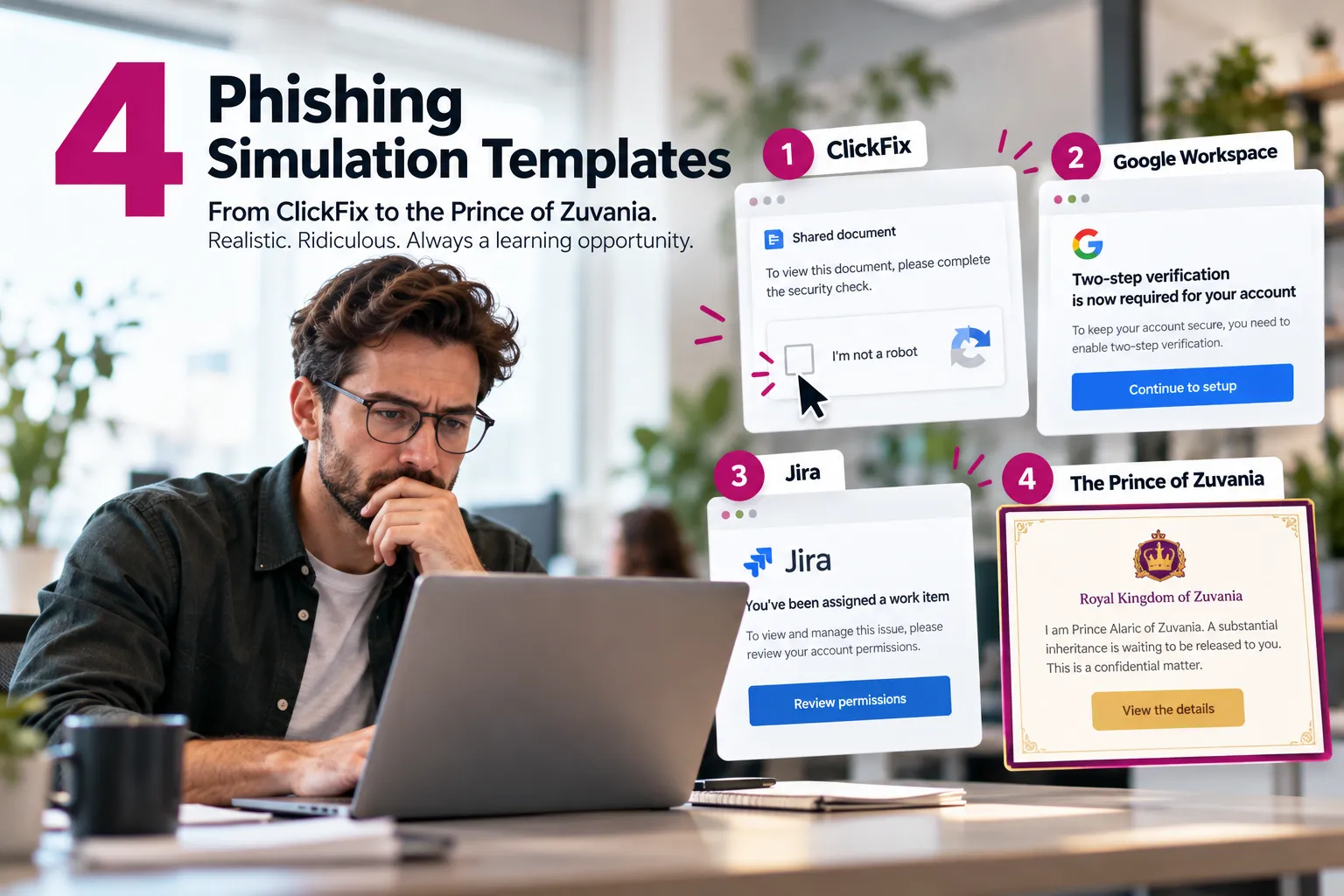
From ClickFix to the Prince of the Royal Kingdom of Zuvania ;-) Four phishing simulation templates for Human Defense Month 2026, ready to import into CYBERDISE. Because phishing doesn’t always have to be boring.

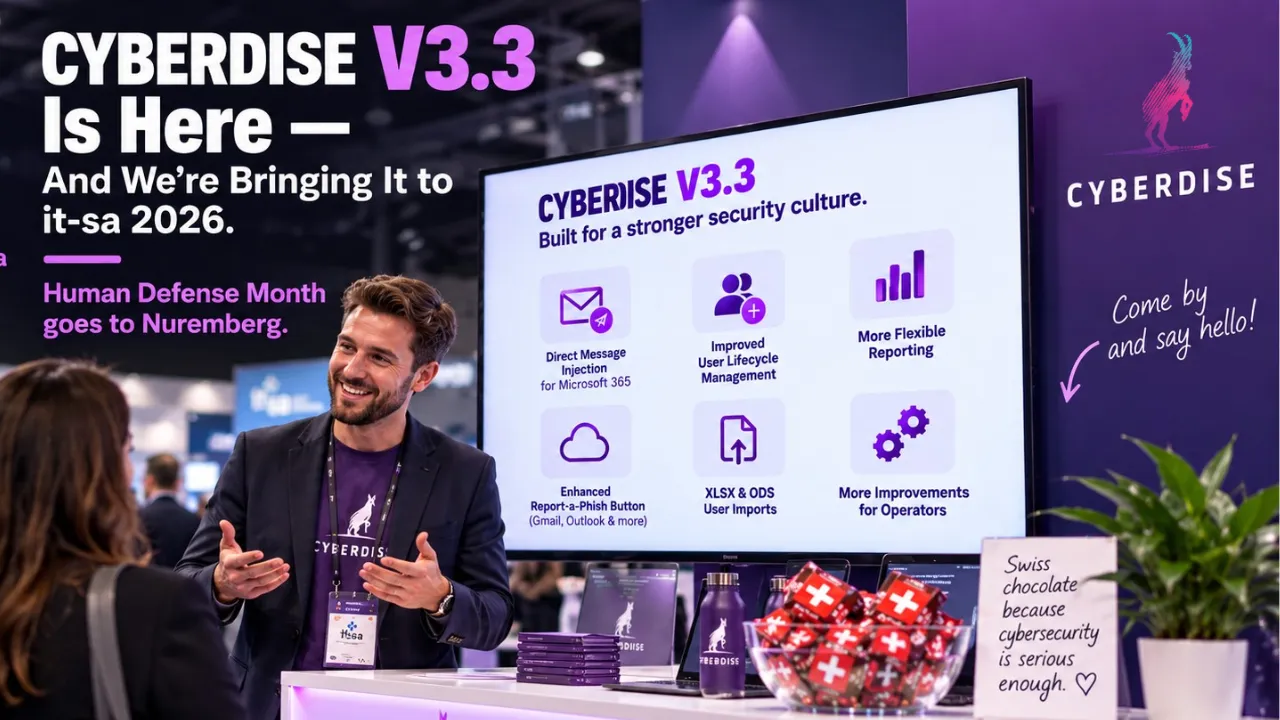
CYBERDISE V3.3, our Human Defense Month release, is out: direct Microsoft 365 delivery for phishing simulations, a more flexible Report-a-Phish button and easier user imports. See it live at it-sa 2026 in Nuremberg, 27–29 October, Hall 7, Booth 301a.

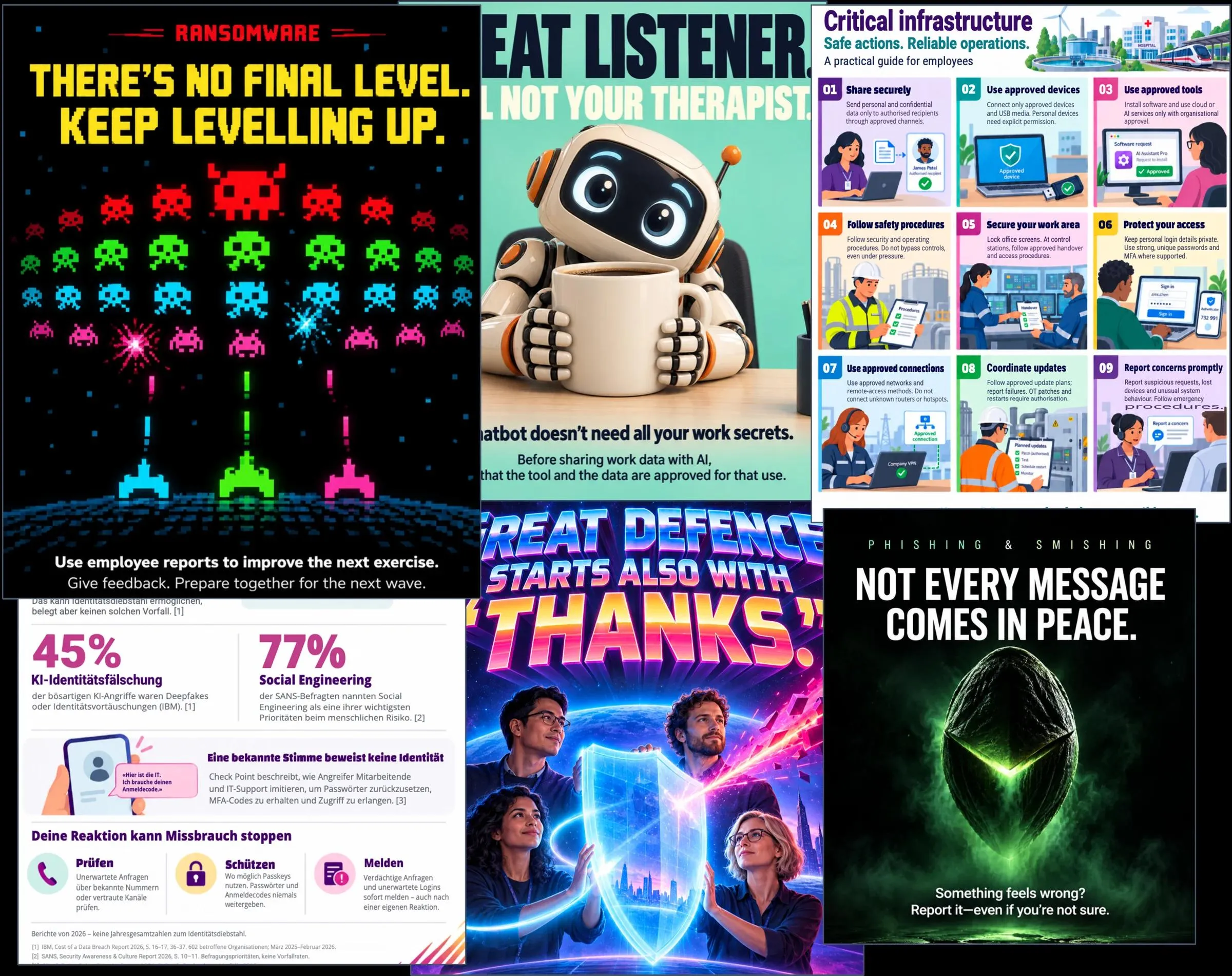
Business is serious enough, so this October we’re having some fun: 23 free security awareness posters across five sets, each in English and German, editable and ready for your office walls, meeting rooms and security team.

In Europe, a security awareness professional earns €92K (about $107K) on average, in North America $131K, according to the 2026 SANS Security Awareness & Culture Report. Set against everything the same report expects of the role, that is less a pay question than a priority question.

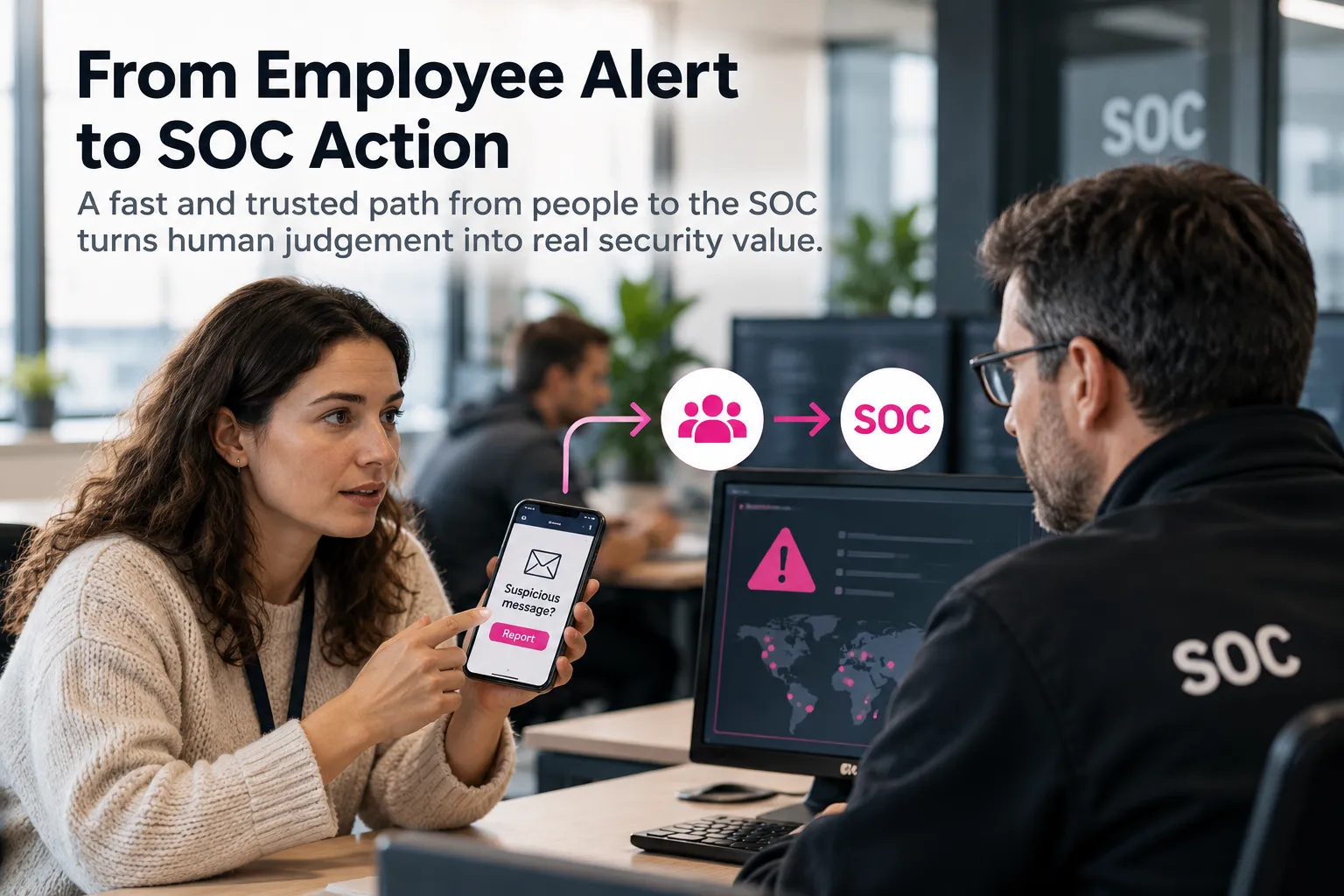
The SANS 2026 security culture action plan is barely about content. A CEO and board member on why that means rewriting your awareness strategy and bringing the SOC closer to employees.

October is Cybersecurity Awareness Month. For 2026, CYBERDISE is putting together a free Human Defense Community Kit: editable posters, infographics, games and phishing templates, in German and English.

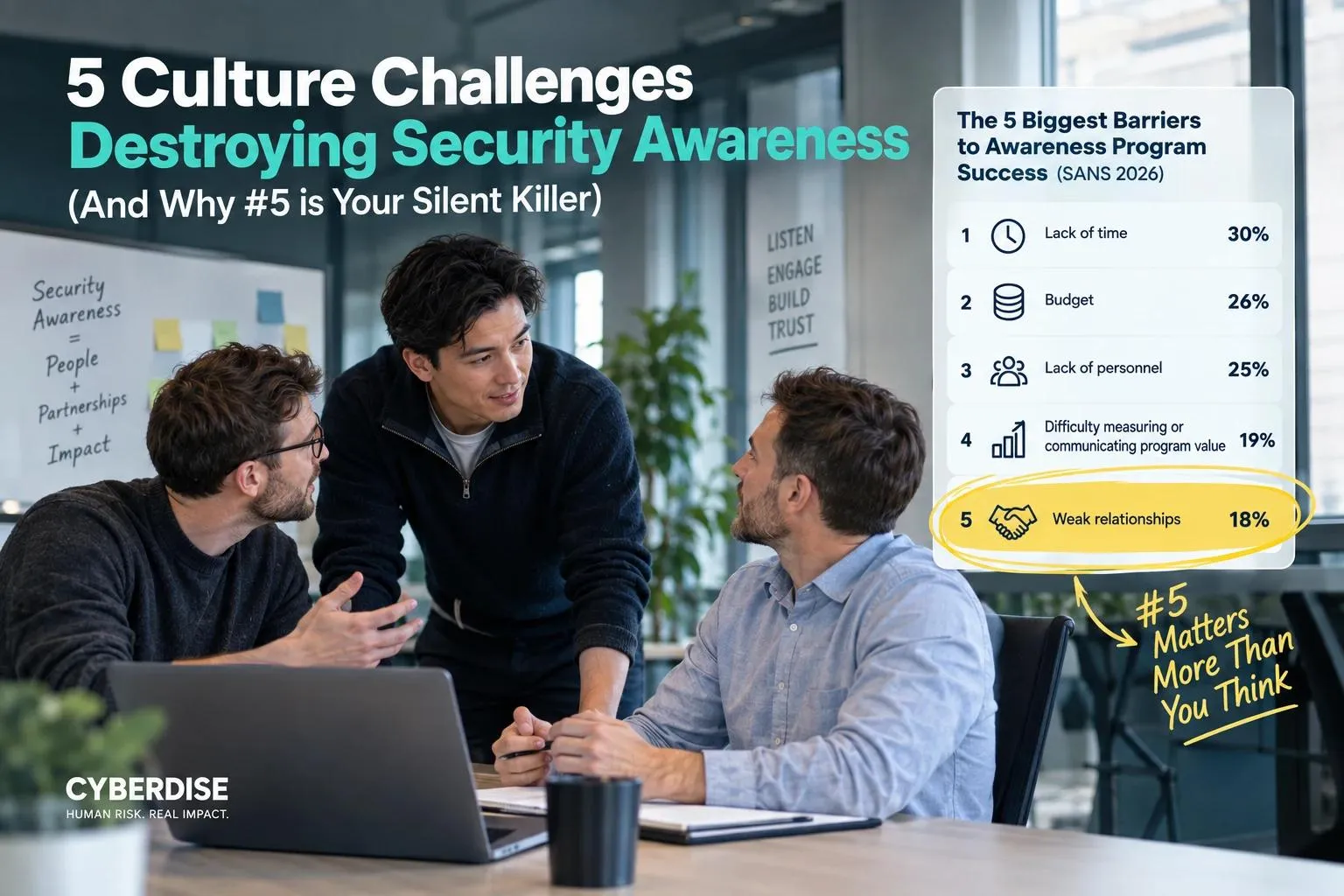
The 2026 SANS Security Awareness & Culture Report names five barriers to program success. The fifth, weak relationships at 18%, comes last and quietly drives the other four.

When people picture a phishing simulation, they think of a suspicious email, a link and a fake Microsoft login page. The cyberattack on the Berlin administration is a pretty good example of why that view has become a little too narrow.

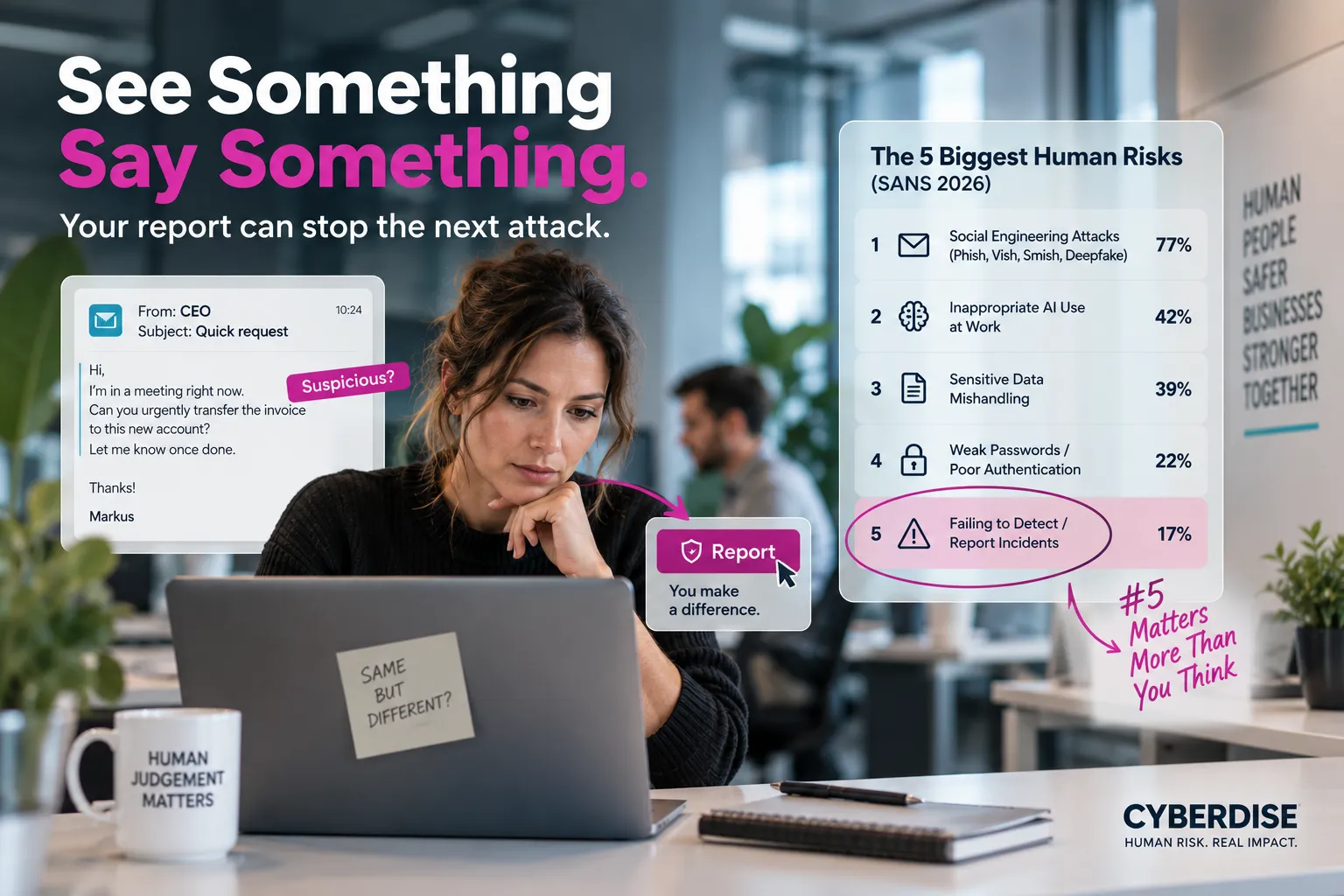
In the 2026 SANS Security Awareness & Culture Report, more than 1,700 practitioners named the risks they are focusing on, and social engineering came out on top at 77%. The fifth risk on the list gets no section of its own, and that is exactly the one I want to talk about.

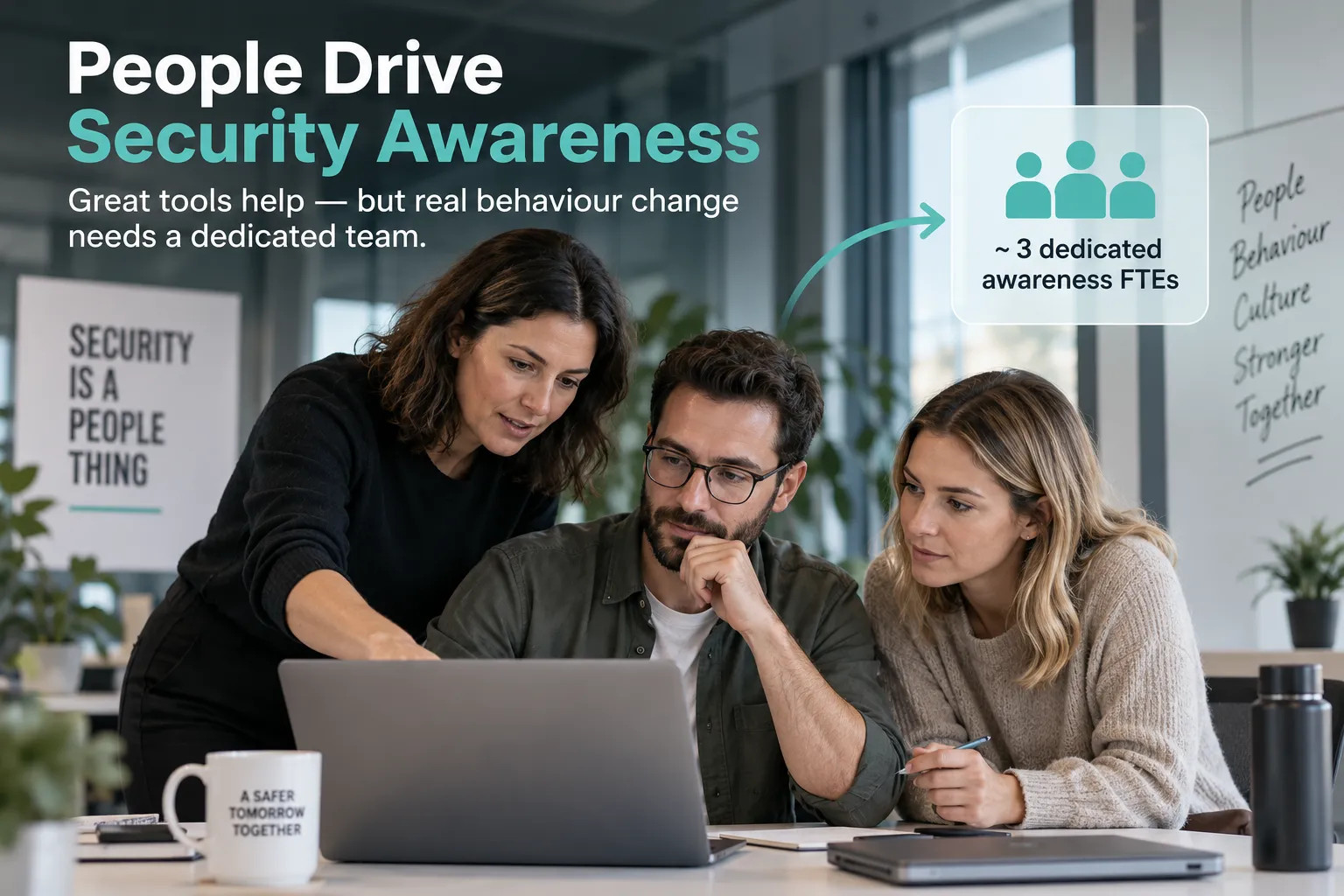
I read the new SANS Security Awareness & Culture Report from a slightly unusual perspective: I manufacture security awareness software. What stayed with me was security awareness team size, not tooling — here are my eight takeaways, including a conclusion I fundamentally disagree with.