Skip to content

Topic: bde

bdeThe 5 Biggest Human Risks in Cybersecurity - and Why #5 Is Ignored

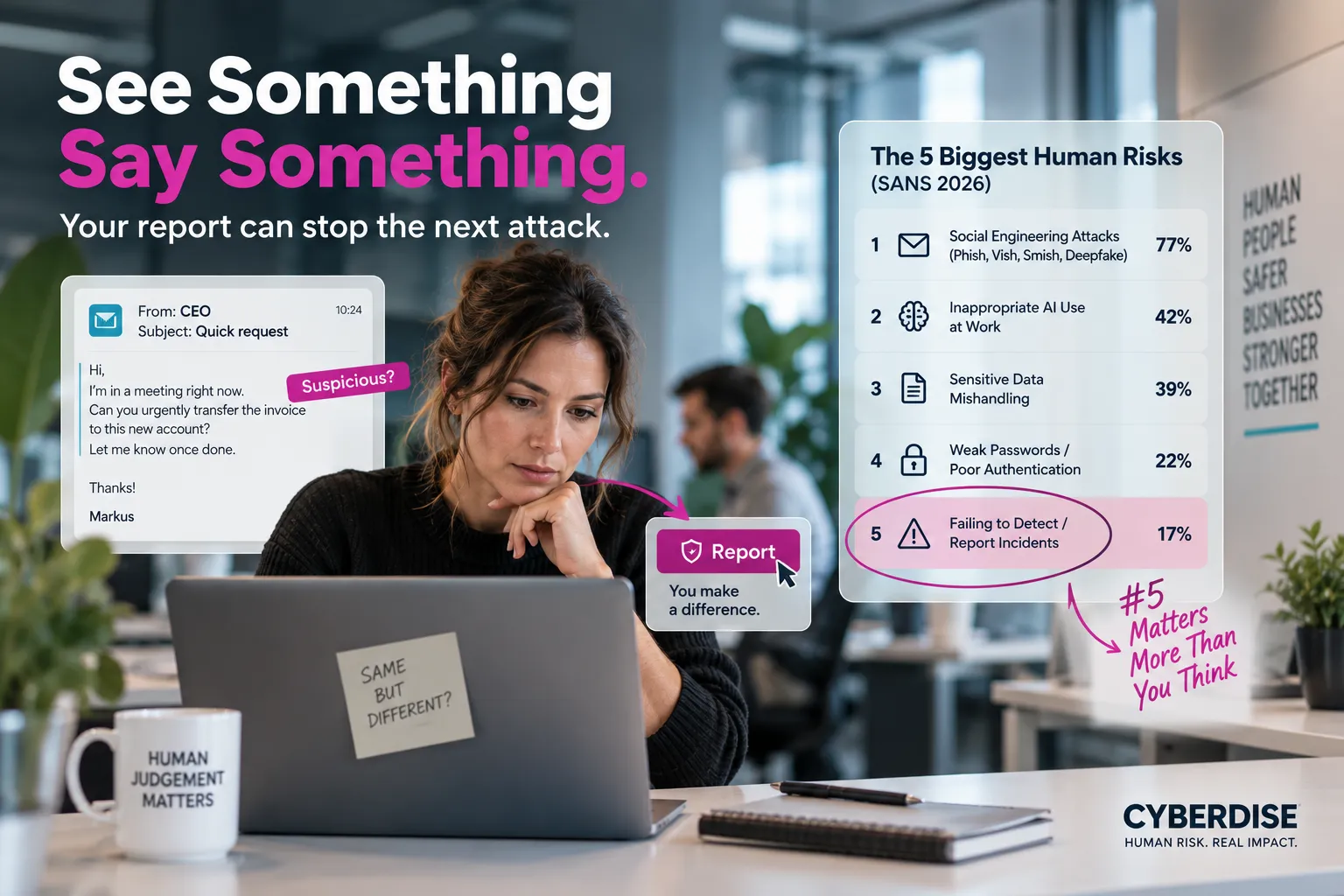
In the 2026 SANS Security Awareness & Culture Report, more than 1,700 practitioners named the risks they are focusing on, and social engineering came out on top at 77%. The fifth risk on the list gets no section of its own, and that is exactly the one I want to talk about.

bdeWhy the Employee Has to Become Part of the Security Stack

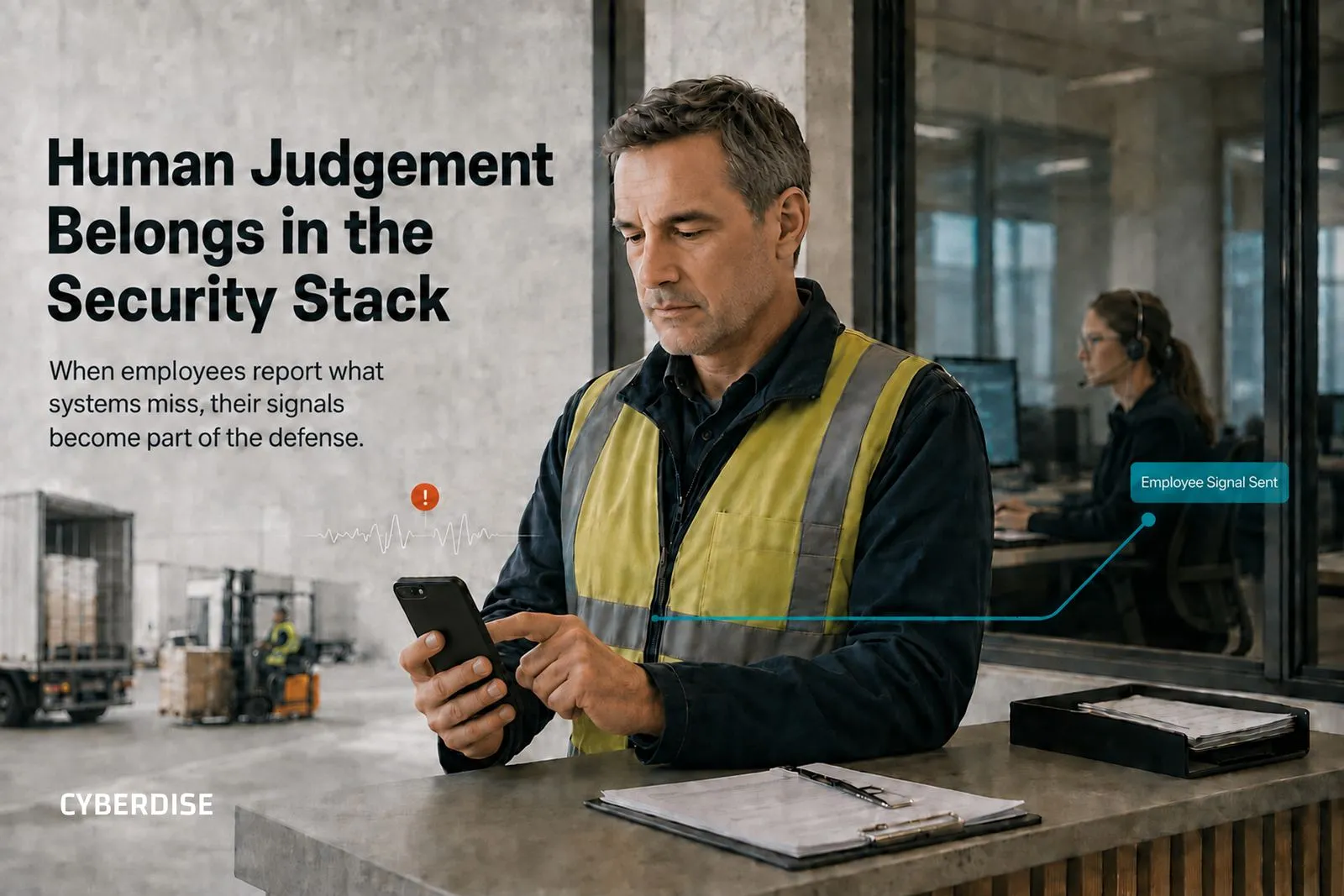
AI is pushing cyber defense to machine speed, but the answer is not to remove people from the equation. It is to treat the human layer — the judgment, decisions and reports of employees — as part of the security stack.

pressBehavioral Defense Engineering: Cyberdise in itbusiness.ch

Swiss IT publication itbusiness.ch has featured Cyberdise, and the headline says it all: cyber defense begins with behavior. Its June 2026 article argues that security awareness training alone no longer protects organizations.

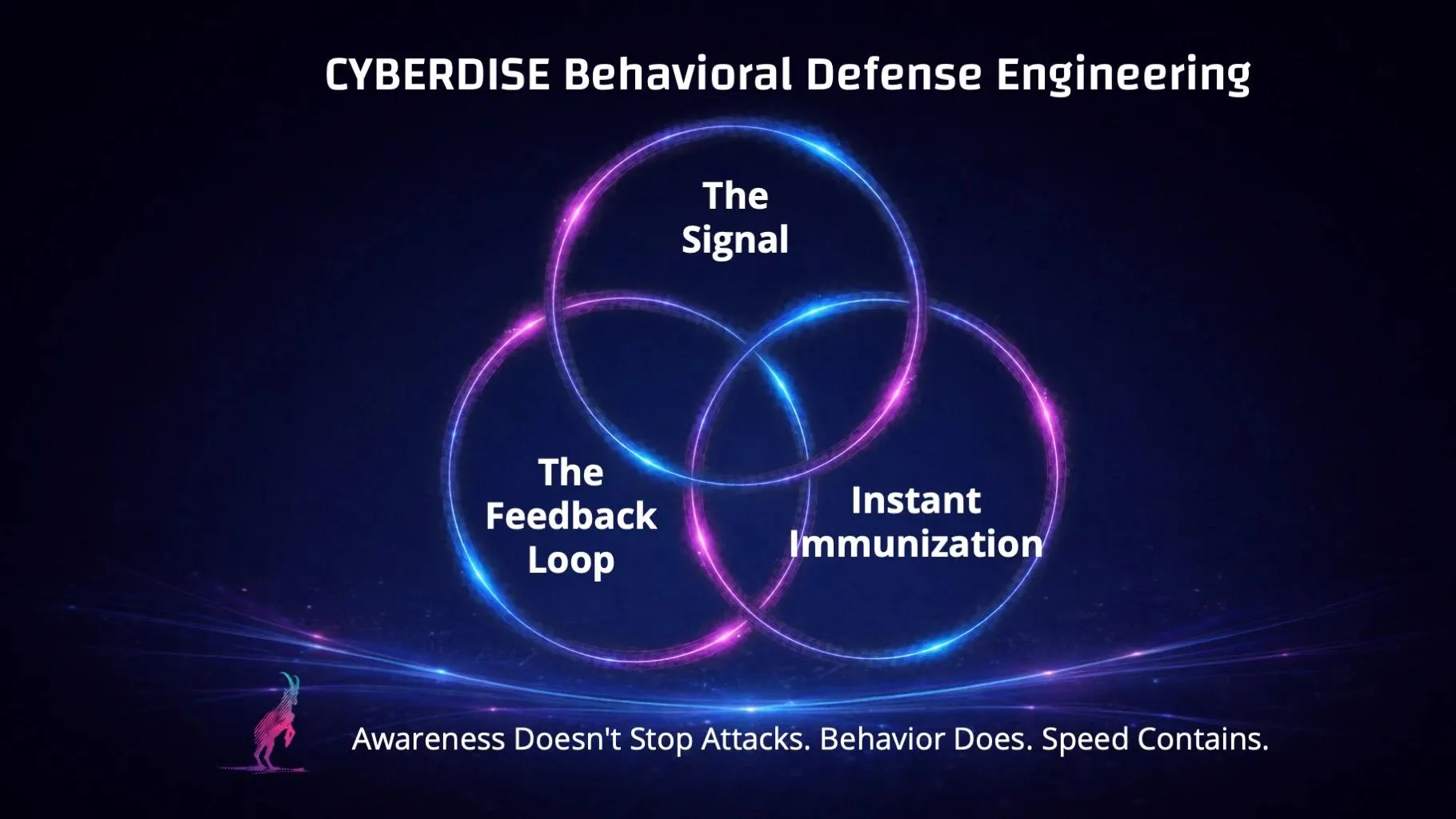
bdeAwareness doesn't stop attacks. Behavior does.

For two decades, security awareness programs have transferred theoretical knowledge — and measurable organizational risk stayed high. With Behavioral Defense Engineering and platform version V3.2, CYBERDISE treats human behavior as an operational part of IT security instead of a compliance checkbox.

bdeThe Next Giant Leap: Why It Is Time to Redefine Human Cybersecurity

Cyberdise is moving from traditional security awareness to Behavioral Defense Engineering (BDE). Employees already know phishing is dangerous, yet under the pressure of daily business they still click: the issue is not a lack of knowledge, it is a behavioral gap.