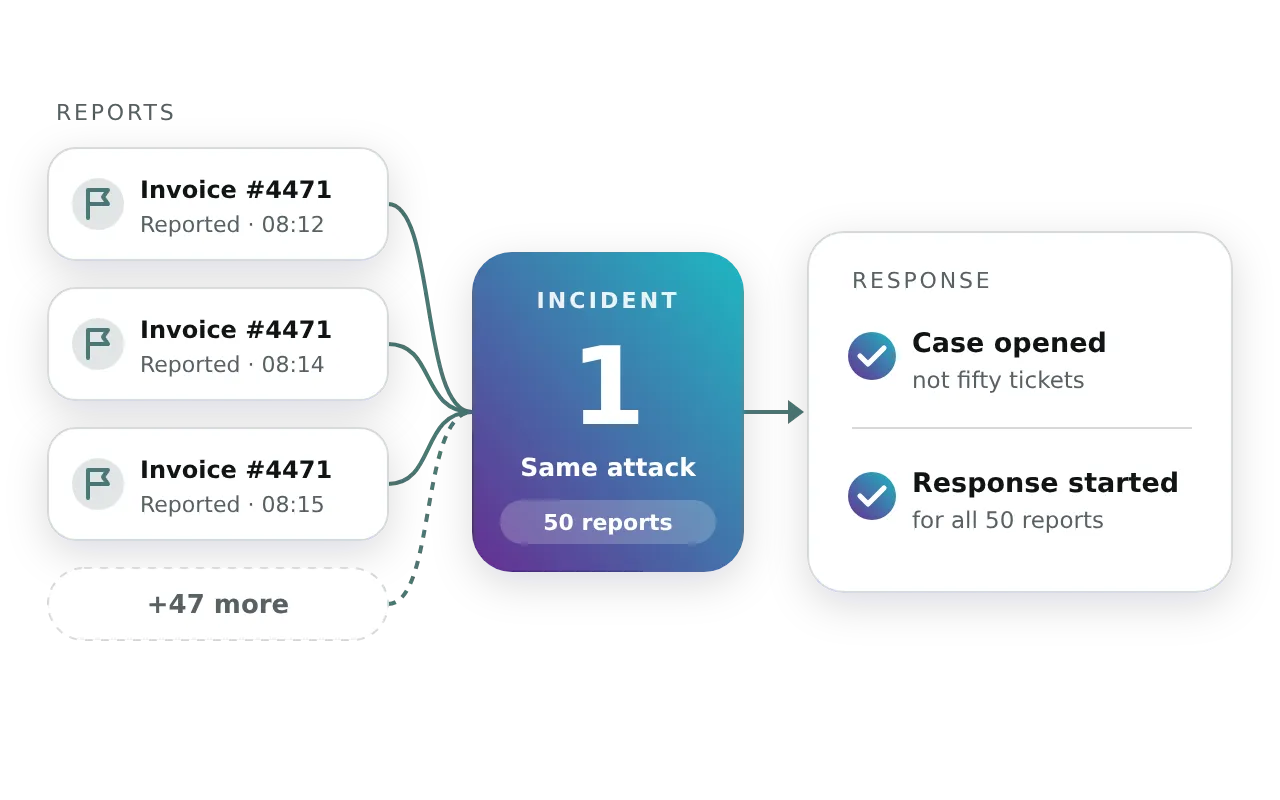
From report to case
Fifty reports of the same attack become one incident, not fifty tickets.
Behavioral Defense Engineering is the operational evolution of cybersecurity awareness. Instead of treating awareness as periodic education, it turns what people notice into part of the security stack.

BDE is more than phishing simulation or e-learning: it builds a defense loop around what people actually do. Each stage produces the input the next one needs, and the cycle does not stop.
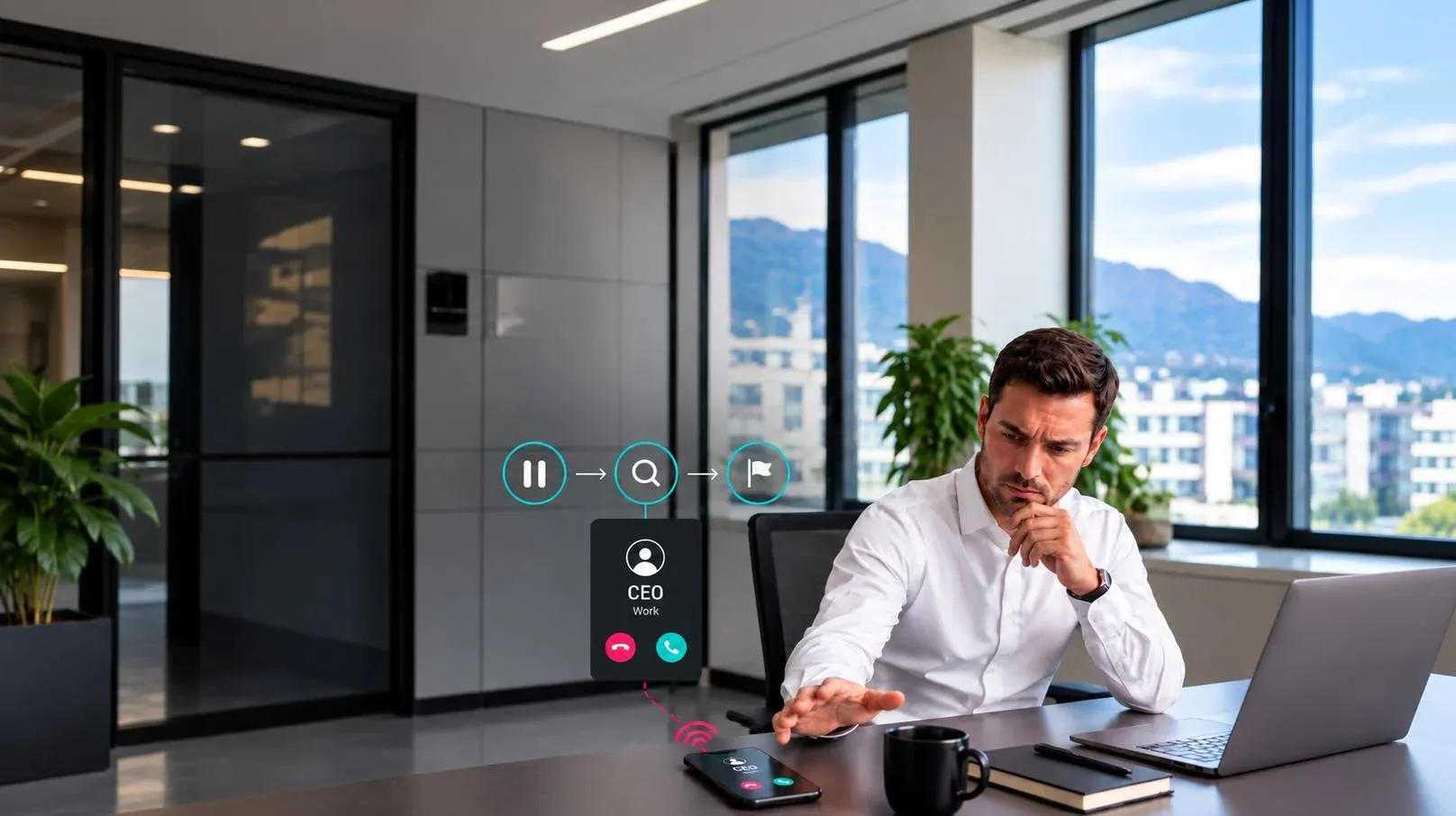
Knowing what phishing looks like does not decide what someone does when a convincing message or call arrives in the middle of a busy day.
With HSLU we compared training, conventional phishing and AI spearphishing, and measured what people actually did. Attitude and behavior turned out to be separate things.
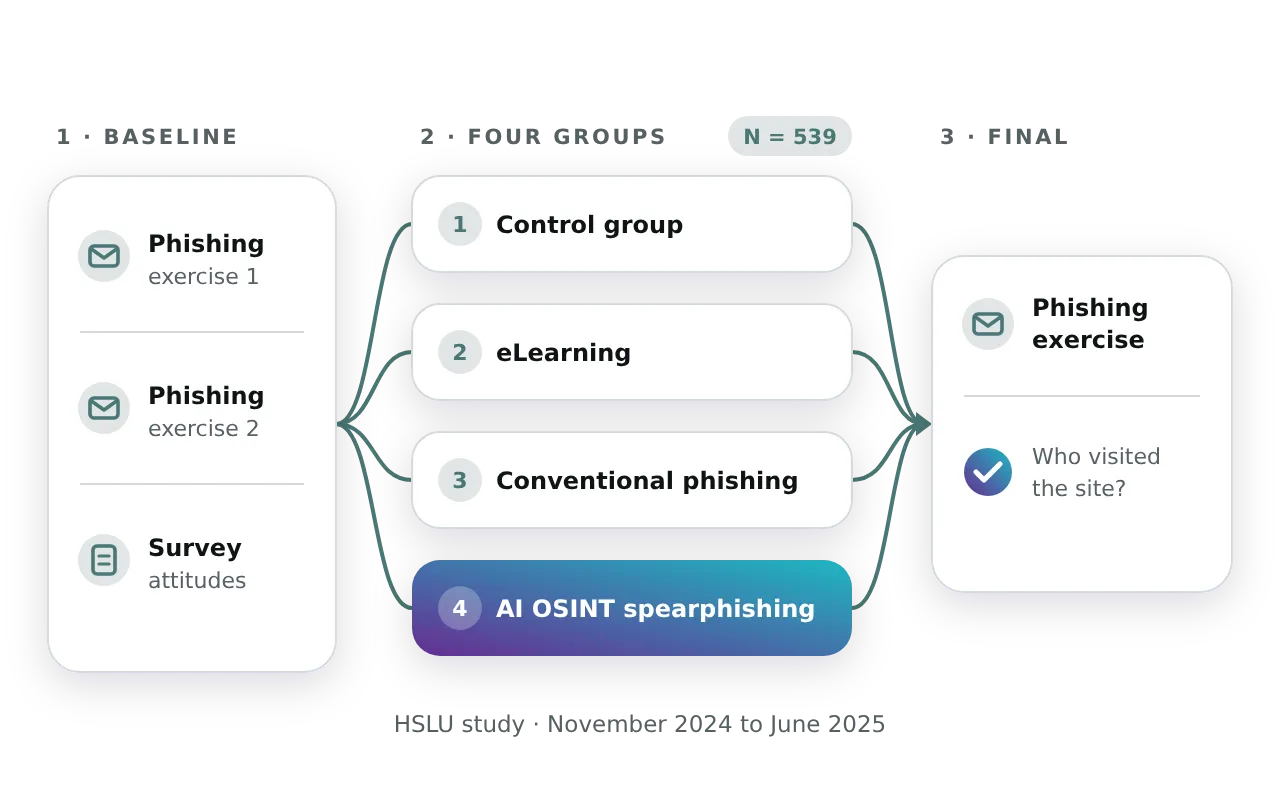
Source: AISP study
Eight capabilities, one platform, one place to operate them.
Fifty reports of the same attack become one incident, not fifty tickets.
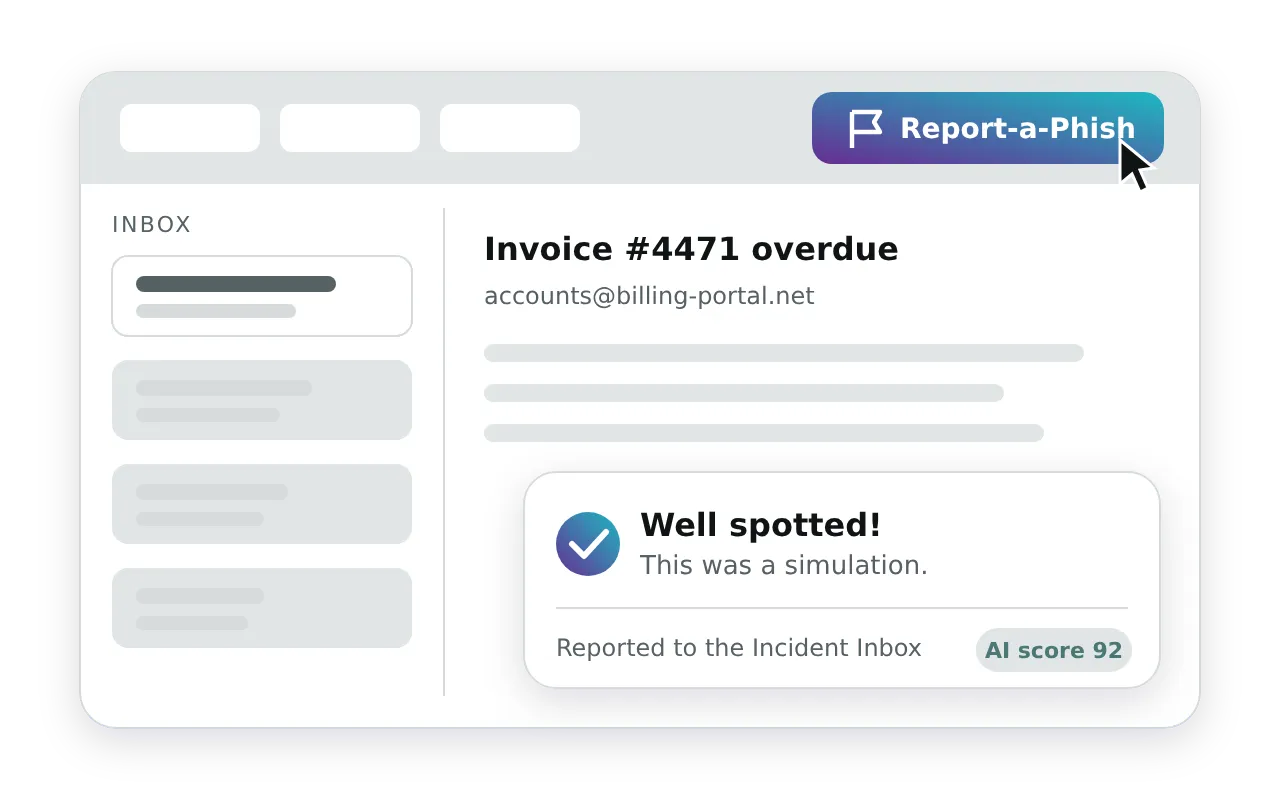
One click in Outlook or Gmail, and the reporter hears back.
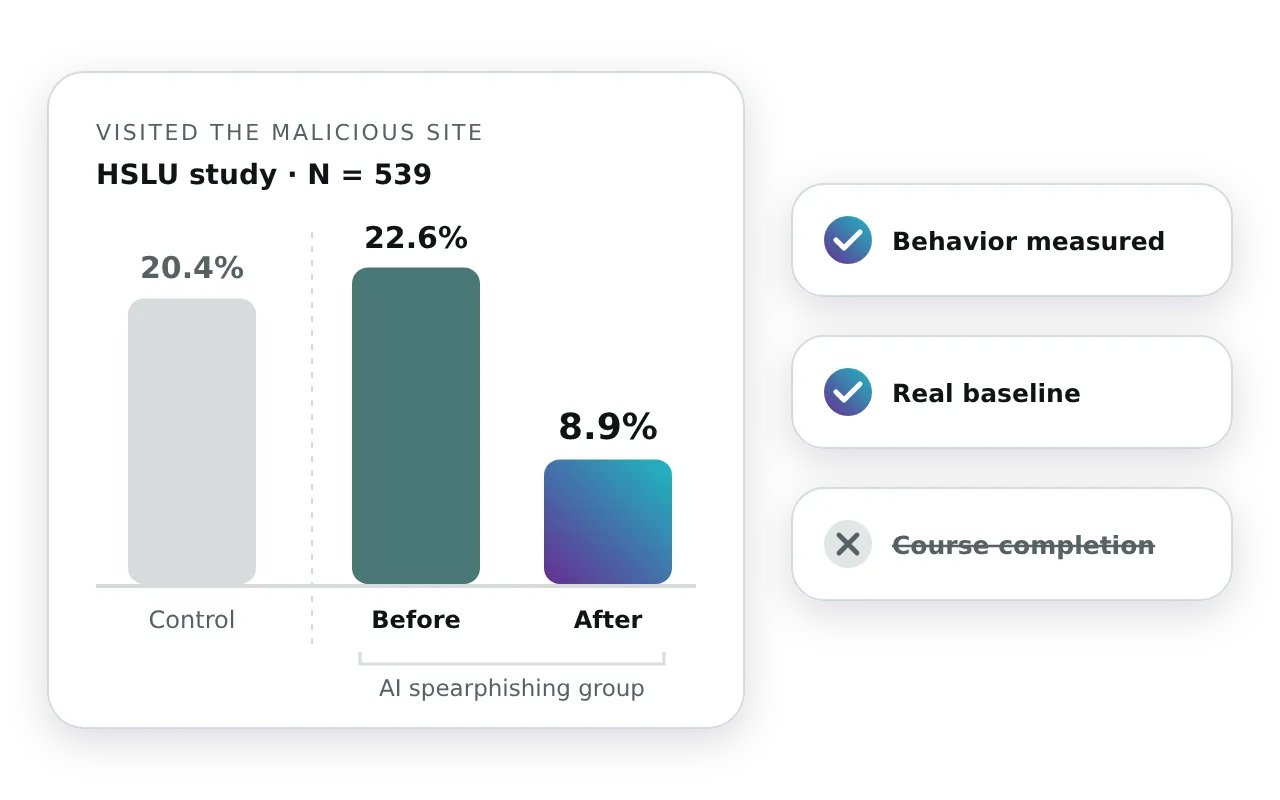
Scores built from what people do, measured against a real baseline.
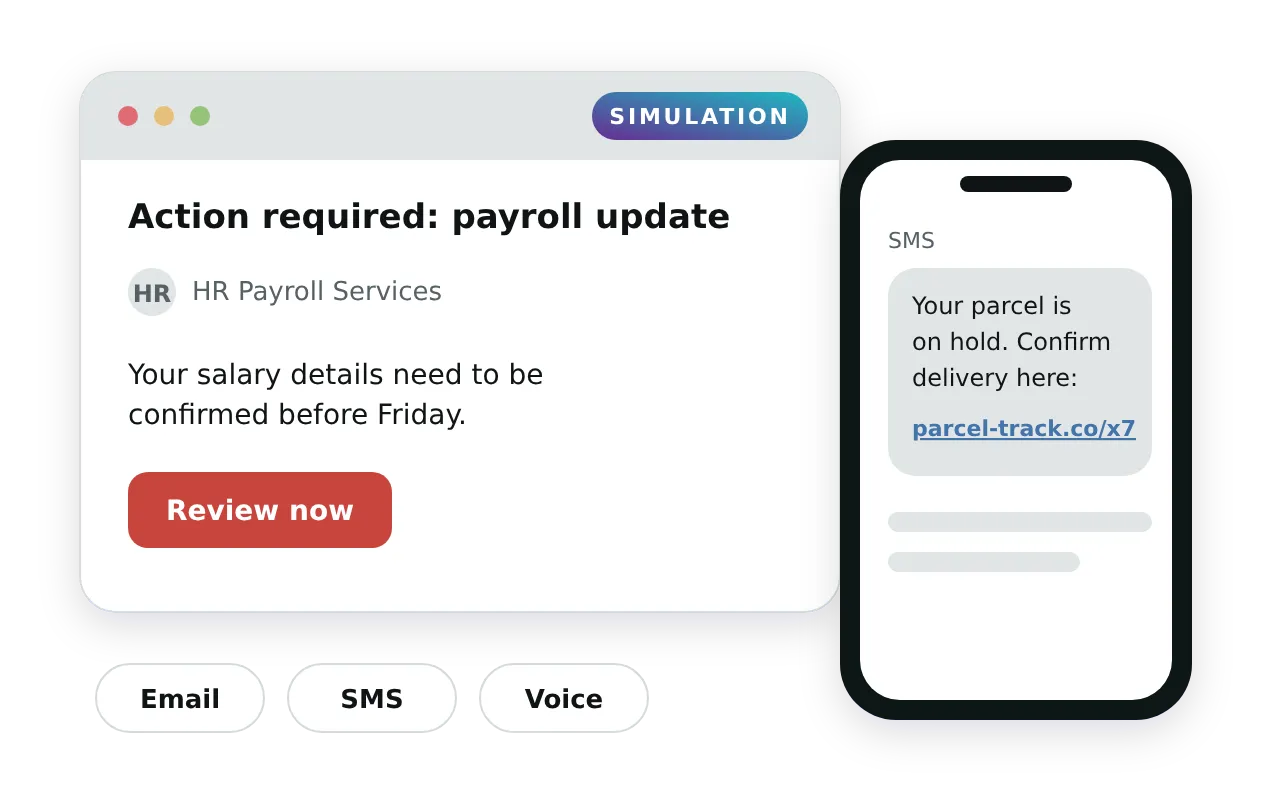
Multichannel exercises built from the tactics attackers are using now.
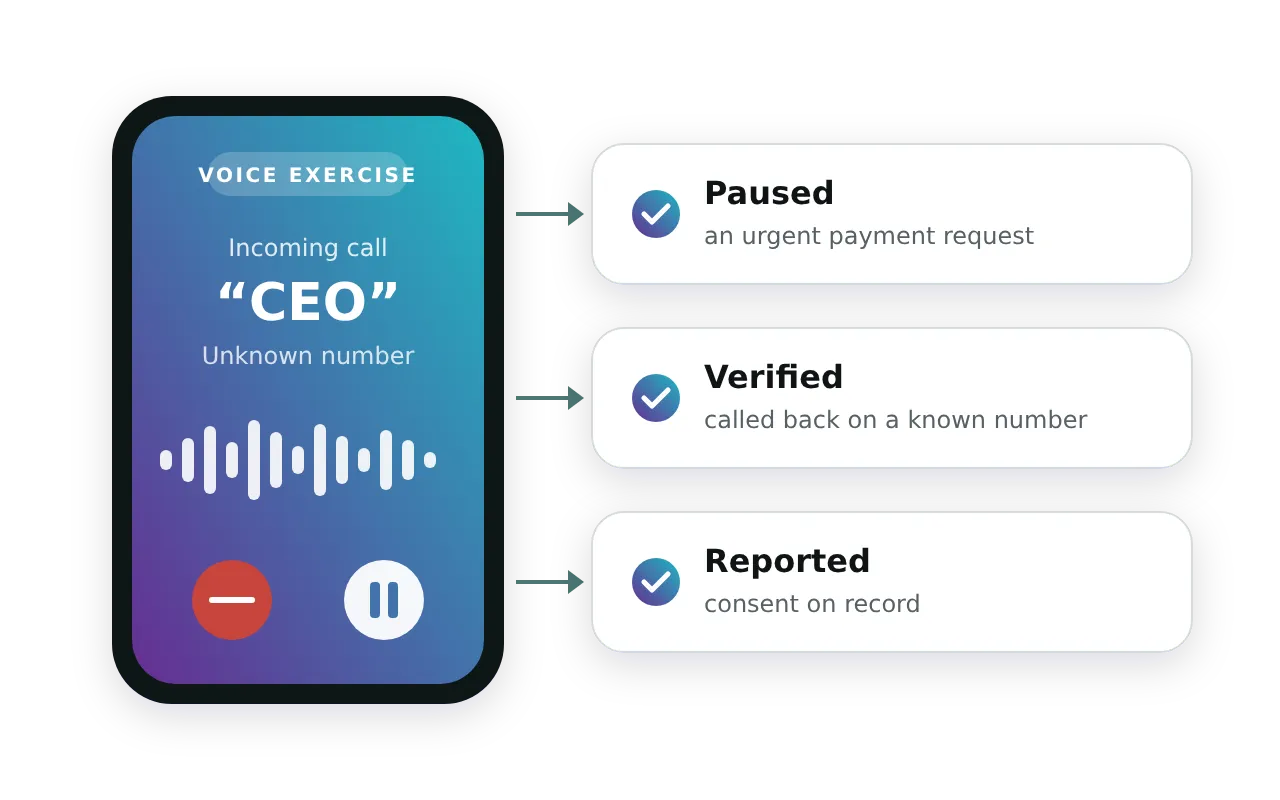
Voice exercises, including cloned voices, with consent tracked per campaign.
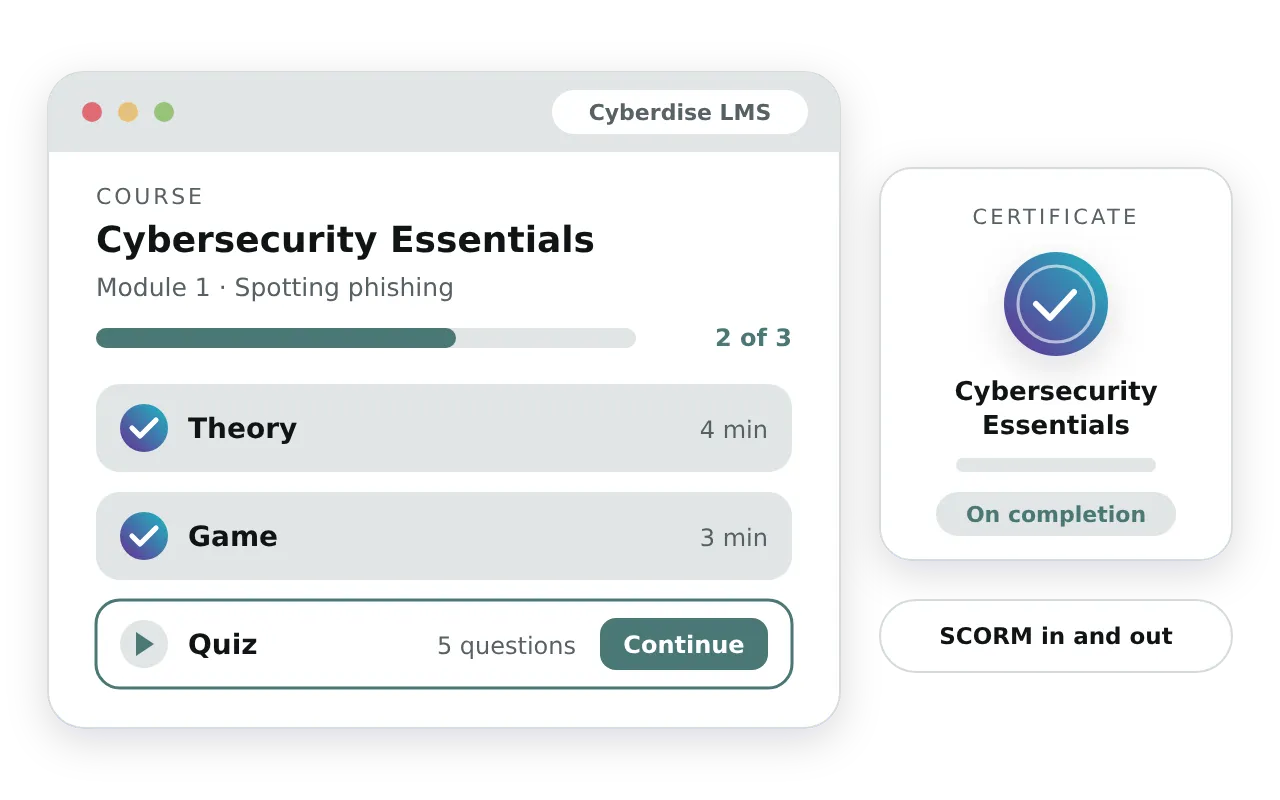
A full learning system in the same platform, with SCORM in and out.
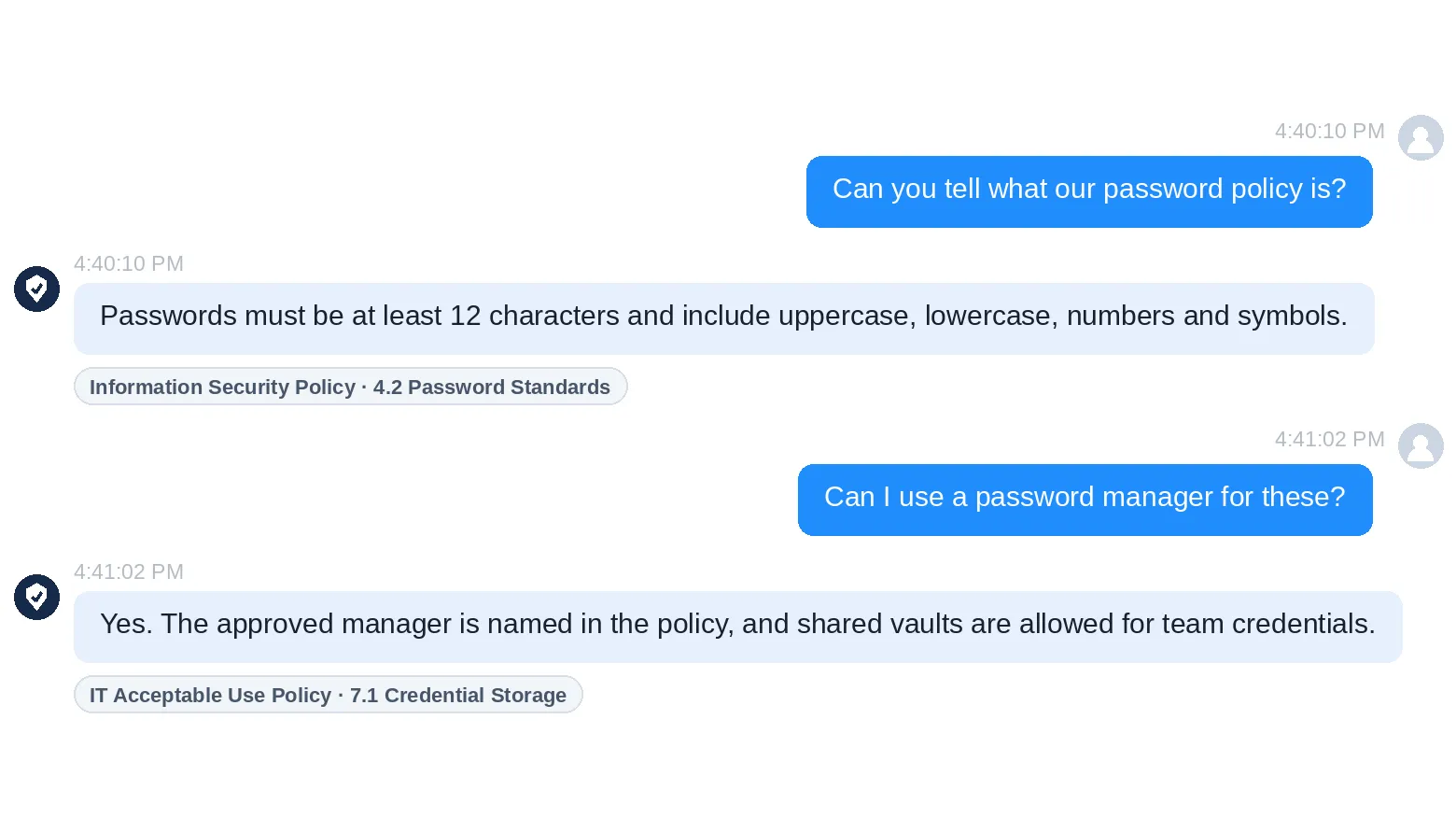
Answers from your own policies, not from generic internet advice.
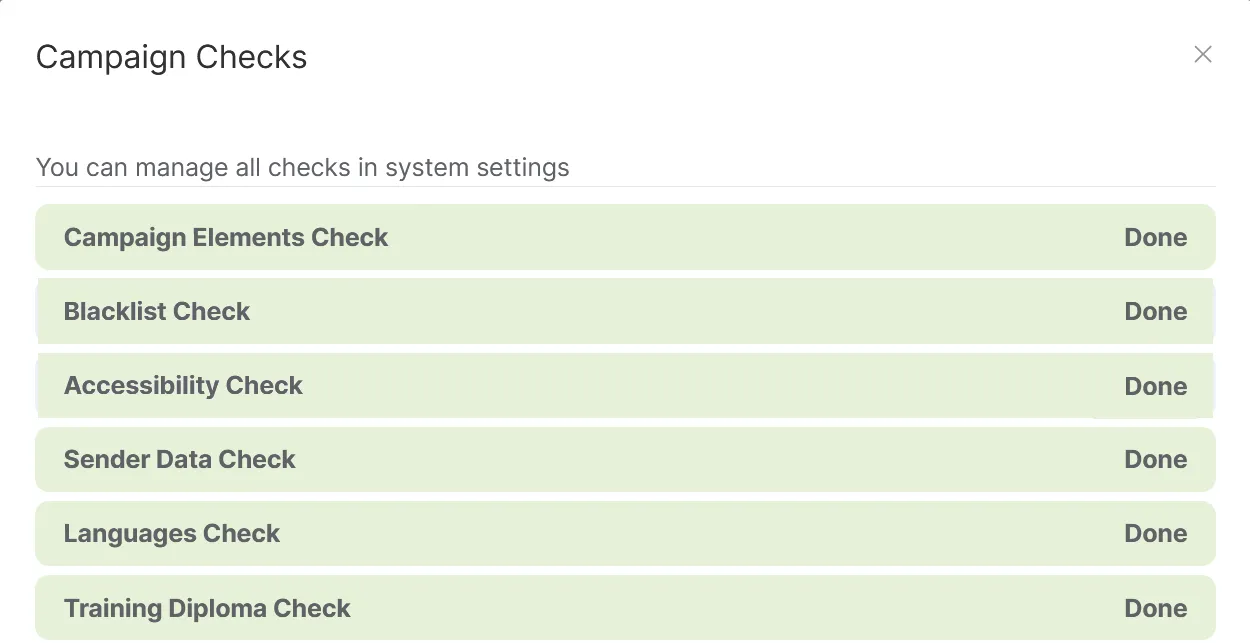
Describe the campaign you need and get a running program.
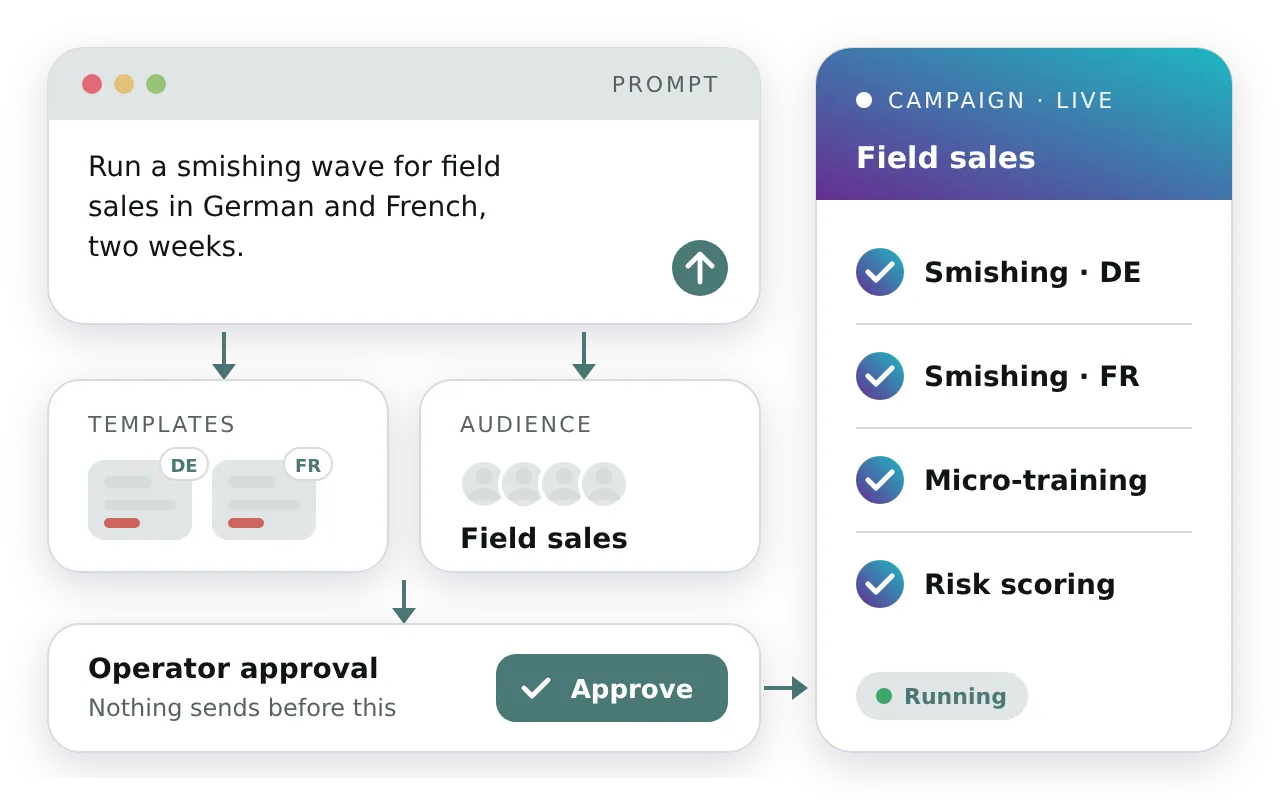
In an awareness program, most of the effort goes into doing the work: building and translating templates, picking audiences, chasing completions, assembling the report. The platform takes that work on, and an operator approves before anything goes out.
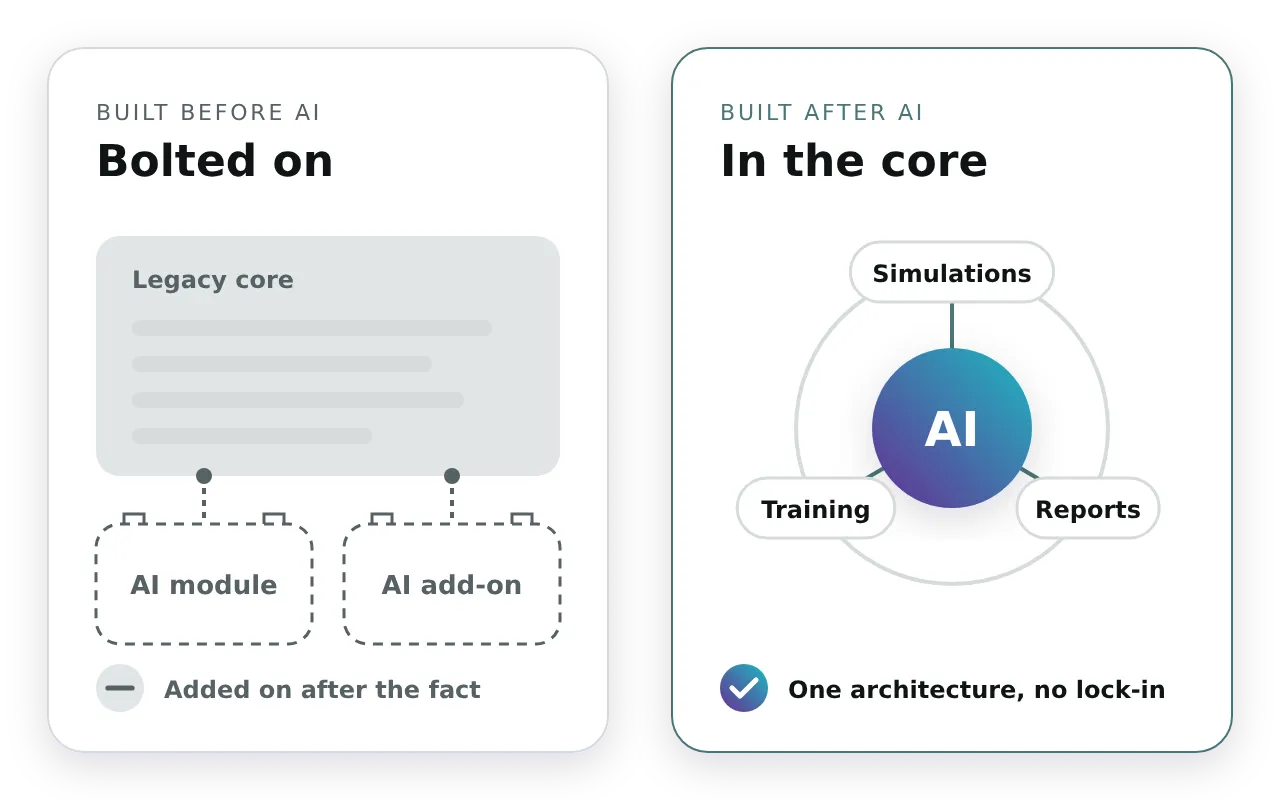
Cyberdise was built from scratch after generative AI existed, which is why the AI sits in the core rather than bolted on as a module. The practical consequence is flexibility: you decide where it runs, what it connects to, and which model answers.
One of your own scenarios, run from the report to the next exercise.