Skip to content

Topic: awareness

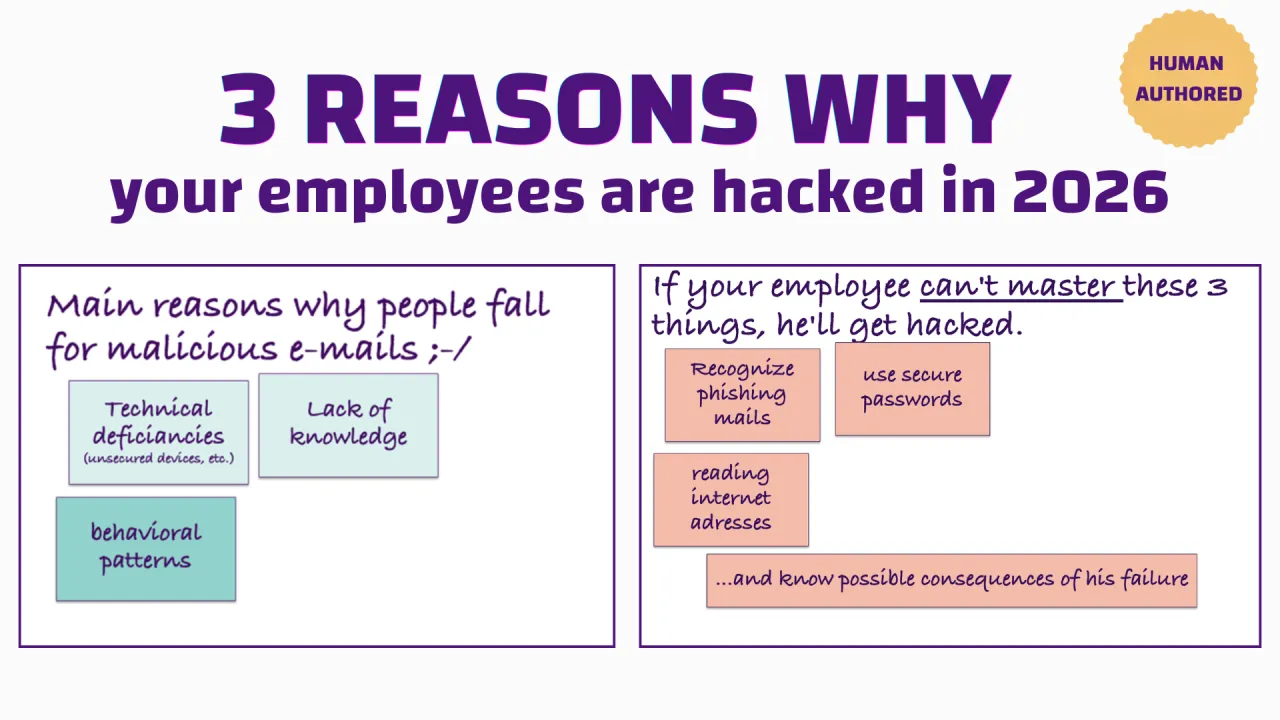
Title card "3 Reasons Why your employees are hacked in 2026": notes naming the main reasons (technical deficiencies, lack of knowledge, behavioral patterns) and the three things employees must master (recognize phishing mails, use secure passwords, read internet addresses)
human-riskThe Three Reasons Why Employees Get Hacked

Nearly half of all successful cyberattacks start with a negligent employee. Search engines will tell you it comes down to phishing, weak passwords and careless data handling. Look closer and all three say the same thing: this is about people.
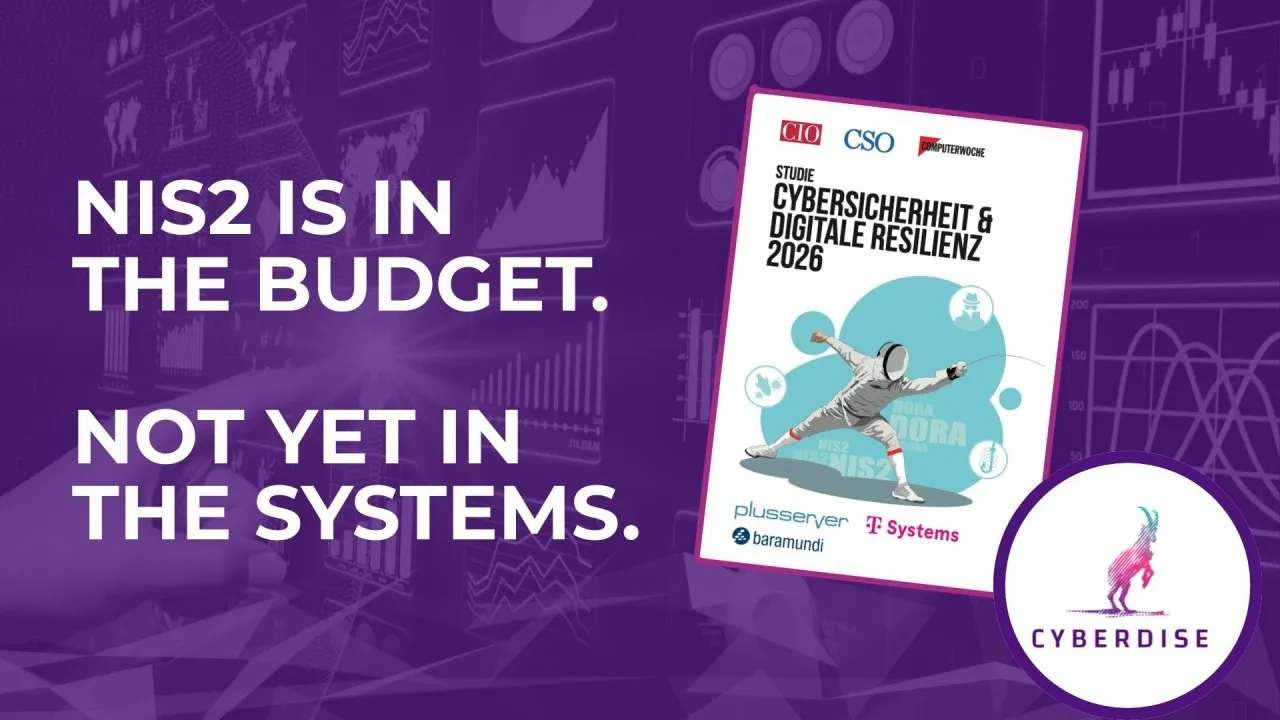
Title card: "NIS2 is in the budget. Not yet in the systems." with the cover of the CIO/CSO/Computerwoche study
awarenessNIS2 Is in the Budget - Not Yet in the Systems

A study by CIO / CSO / Computerwoche, based on 324 interviews with senior IT decision-makers across DACH, shows how NIS2 is reshaping the way organisations think about cybersecurity. But compliance and actual resilience are still far apart.

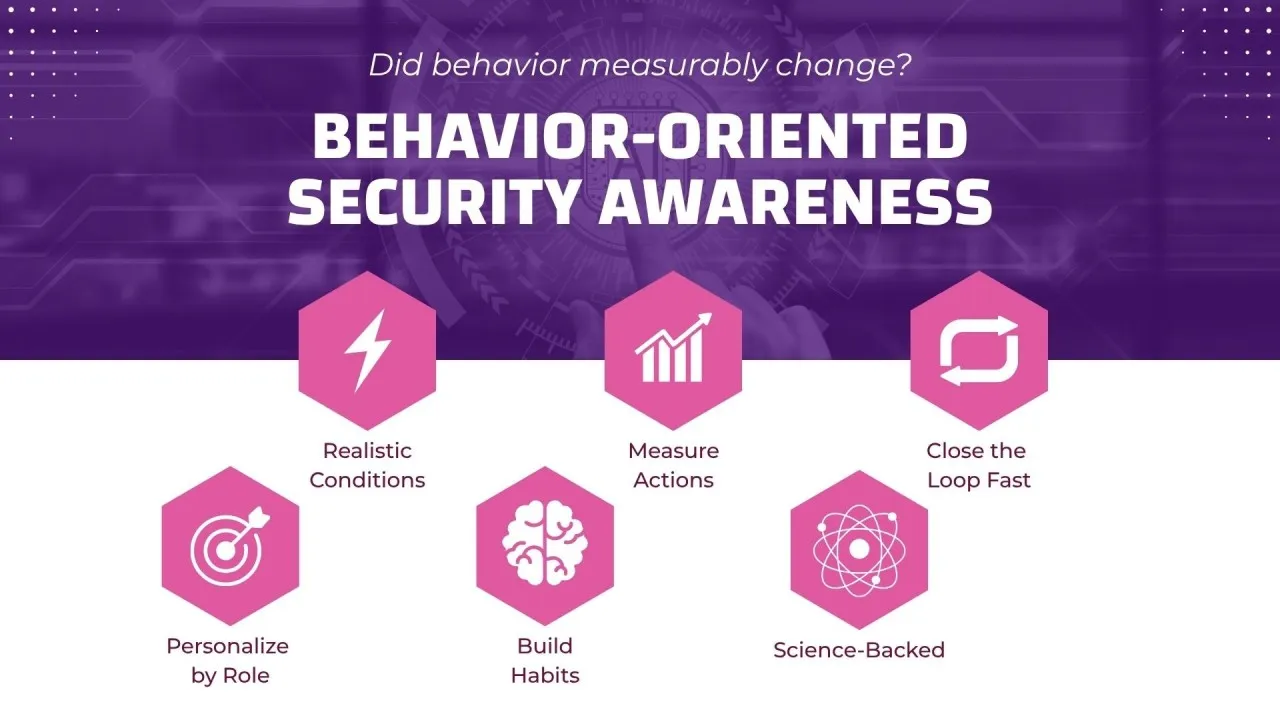
Graphic "Behavior-Oriented Security Awareness" with six principles, from realistic conditions and measuring actions to habits
human-riskWhat is Behavior-Oriented Cybersecurity Awareness?

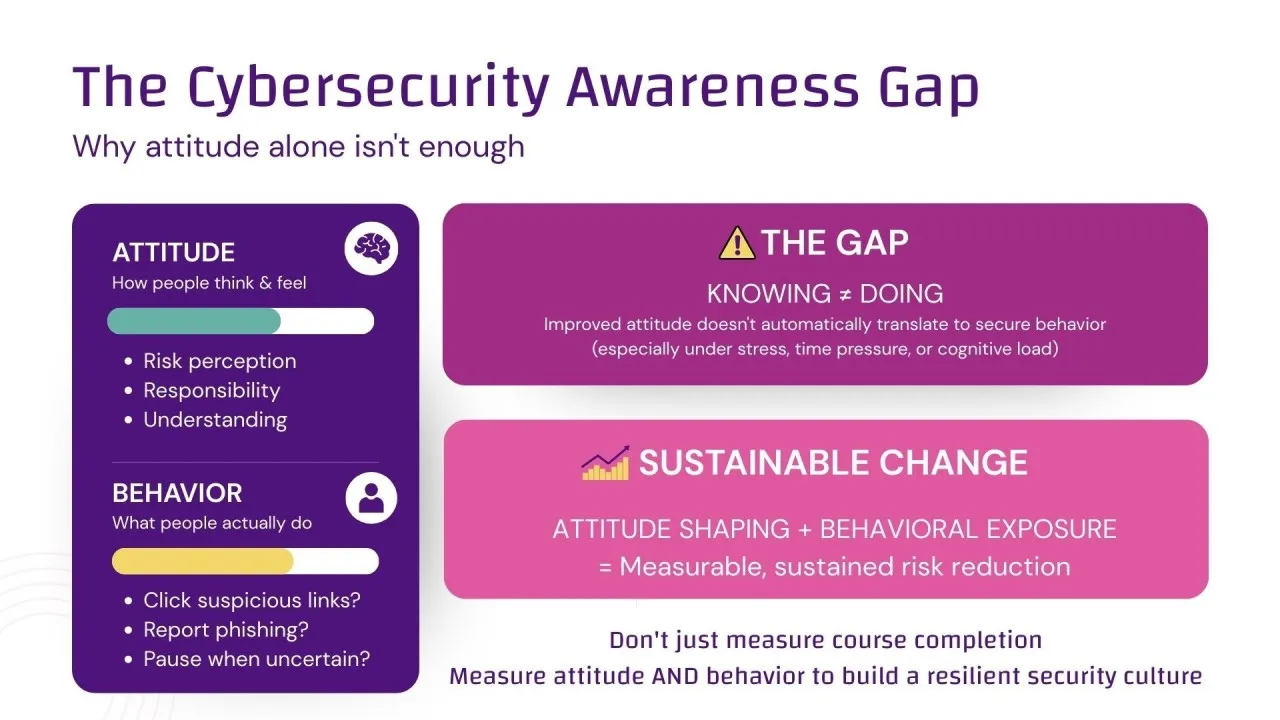
Behavior-oriented awareness measures success by observable change in risk behavior, not by knowledge completion, positive feedback scores or course consumption. It treats employees as human decision systems – not as information storage units.

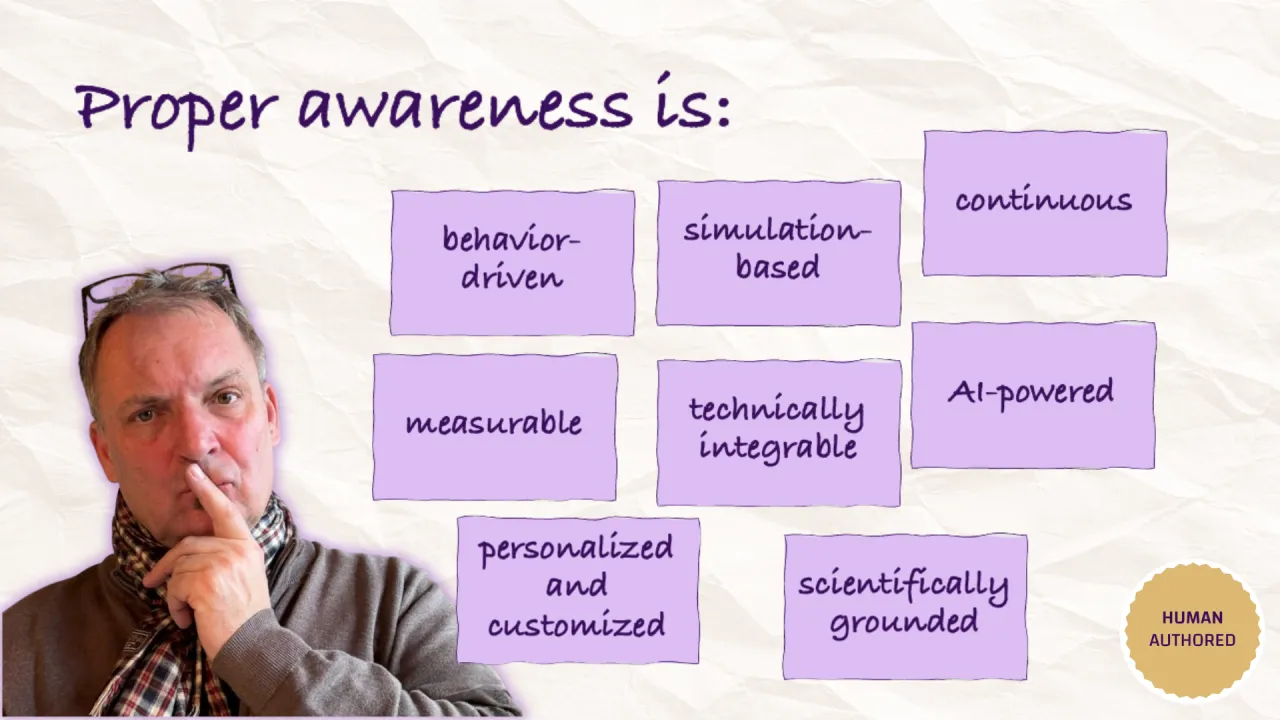
Title card "Proper awareness is:" with eight notes (behavior-driven, simulation-based, continuous, measurable, technically integrable, AI-powered, personalized and customized, scientifically grounded) beside a thoughtful man
awarenessWhat is Proper Cybersecurity Awareness?

An entire industry often offers customers products and services with little benefit. In the cybersecurity awareness market, they often do not aim to change behavior.

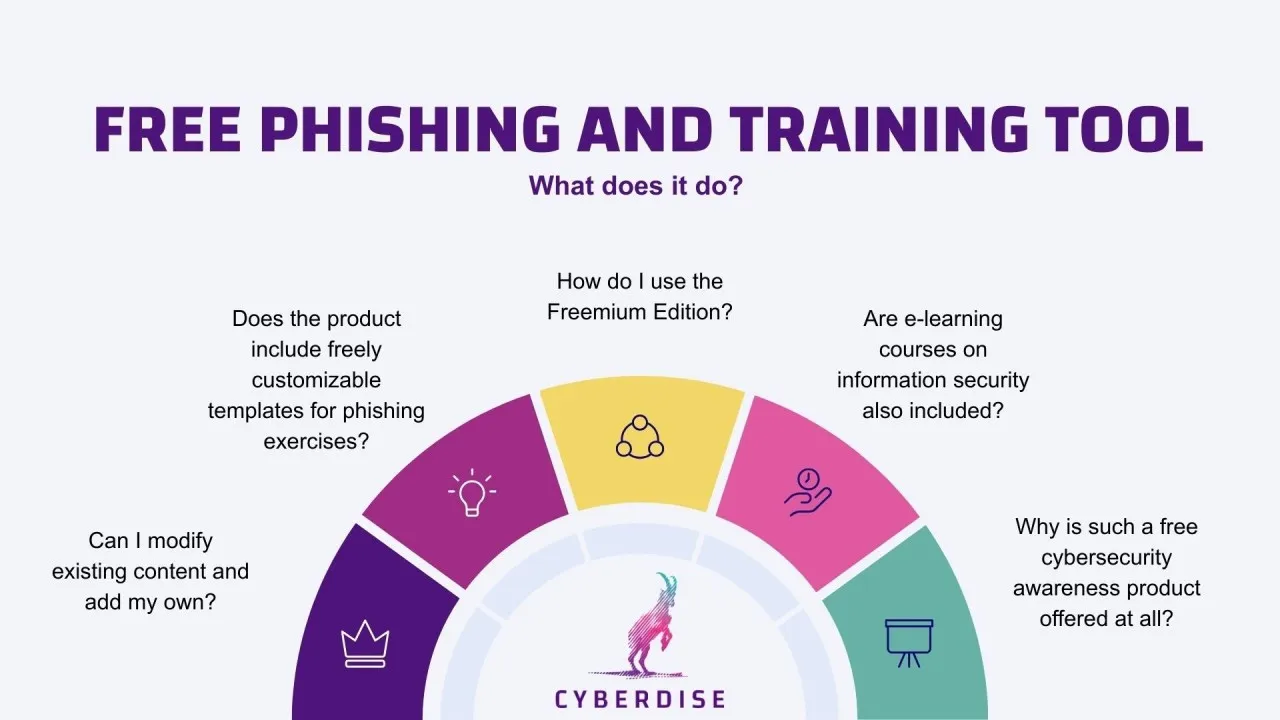
Graphic "Free Phishing and Training Tool – What does it do?" with five questions about the Freemium Edition
productWhat Does Our Free Phishing and Training Tool Do?

The CYBERDISE Freemium Edition is a free phishing tool and learning environment: technically speaking, an attack simulator and a lean LMS with a content editor and user management. Here are the answers on what it includes, what it needs to run and where its limitations are.

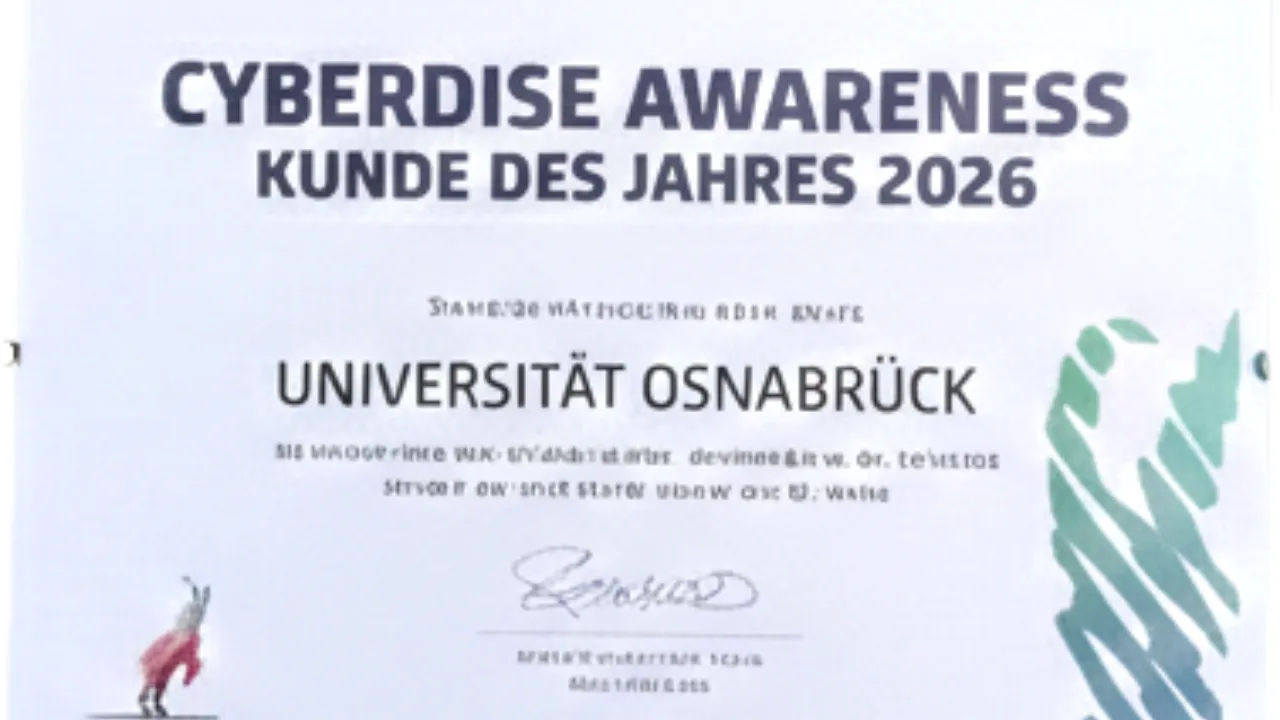
Certificate "Cyberdise Awareness Kunde des Jahres 2026" (Customer of the Year) awarded to Universität Osnabrück.
productWhy the University of Osnabrück is our Awareness Customer of the Year

Our internal selection committee quickly reached consensus on who should receive this award: the University of Osnabrück. It receives the “Awareness Customer of the Year 2026” award for the exemplary implementation of CYBERDISE in an on-premise configuration.

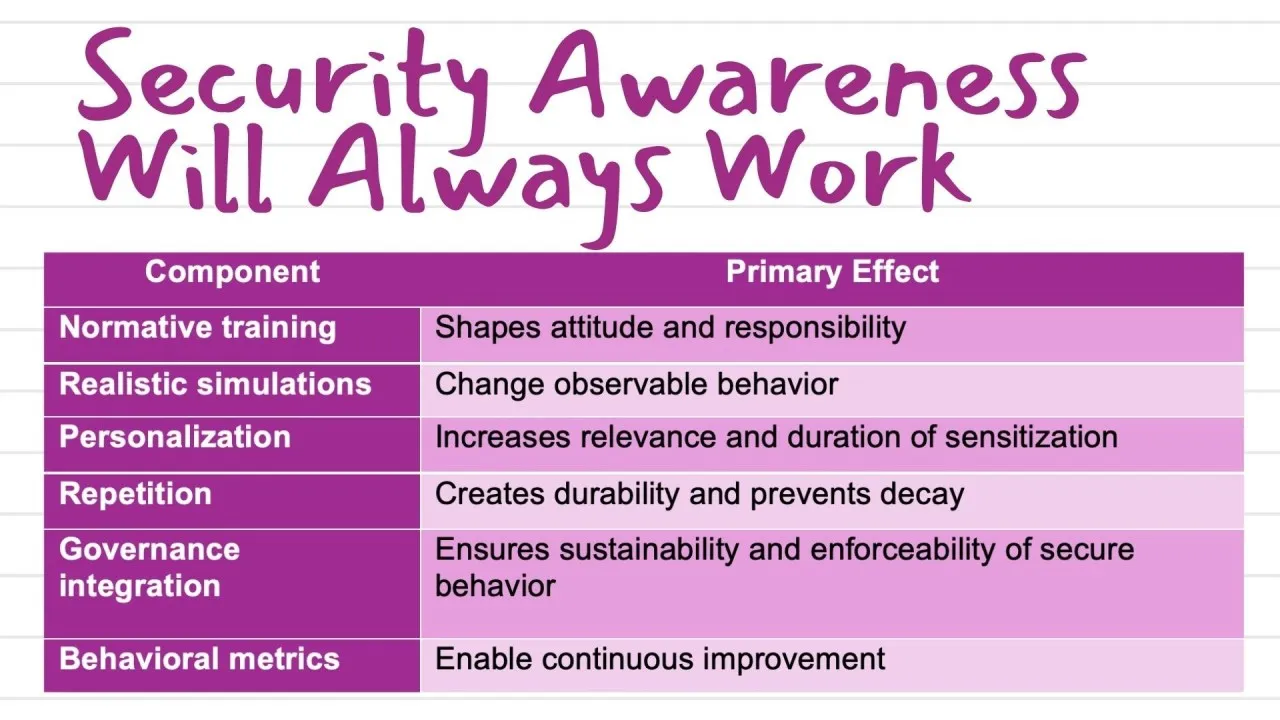
Graphic "Security Awareness Will Always Work": table of six awareness components and their primary effect
awarenessWhy Security Awareness Will Always Work – If You Build and Measure the Right Thing

A Wall Street Journal article drawing on the study “Understanding the Efficacy of Phishing Training in Practice” questions whether phishing simulations and awareness training lead to meaningful risk reduction. A growing body of empirical research shows that well-designed awareness programs do improve real-world cyber risk behavior; what often fails is a narrow interpretation of what awareness is, how it should be embedded and how success should be measured.

Meme: "Starting Cybersecurity Awareness Program?" beside Buzz Lightyear telling Woody "Mistakes, mistakes everywhere"
comparisonWhat CUSTOMERS DO WRONG when starting Cybersecurity Awareness Programs

Like any other project, a cybersecurity awareness program can get off to a very bumpy start when it begins with an inappropriate mindset and management fails to recognize the value of awareness. We examined the mistakes and false expectations documented in a USENIX study and compared them with our own experience.