Dual-use OSINT for better habits, effective awareness and improved risk behavior with CYBERDISE Social Engineering Radar, Attack Template Feed and Vulnerability Profiles.
If attackers use context to increase the probability of success, why shouldn’t we use the same context to increase the probability of successful defense?
An OSINT phishing simulation answers that question: it uses the same public context to build exercises that feel as real as the attacks your employees will meet.
Attackers already use the context awareness programs leave out
Attackers research employee names, professional interests and business relationships before making contact (read: before they attack). Why? Because a request becomes more credible when it refers to a real colleague or fits the recipient’s responsibilities. MITRE ATT&CK documents this reconnaissance and its use in social engineering.
Too many phishing simulations still rehearse yesterday’s attack patterns through generic scenarios. Employees receive another generic parcel notification or Microsoft password-reset simulation, often with little connection to their working context. Those scenarios remain useful, but repeatedly relying on them leaves important decisions unpracticed.
If everyone receives the same exercise, attackers may already know your employees better than your awareness program does. When a program deliberately strips away context, it removes precisely the information that can make a real attack convincing.
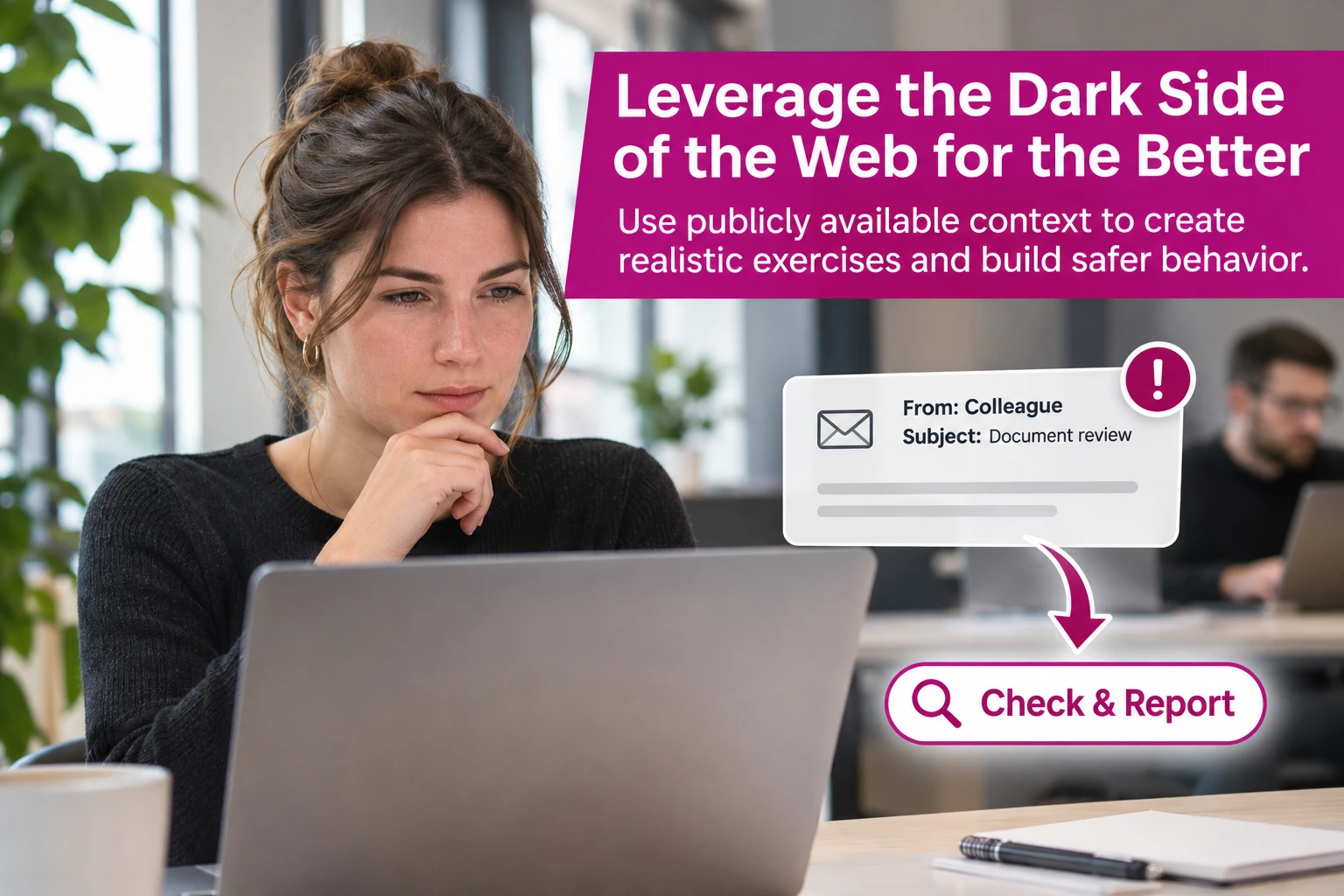
Defenders can use that information too. OSINT, or open-source intelligence, draws on publicly available information. Its dual use lies in the purpose: the same context that supports deception can help us decide what employees should practice. The ‘dark side’ here is the criminal use of information available across the web.
From public information to an OSINT phishing simulation
CYBERDISE’s OSINT collection is available inside the platform. Operators use the Collect OSINT Data function to gather public context, then inspect the collected information in the user’s OSINT view. Relevant data can include job titles, skills and professional connections. This information supports Educational Vulnerability Profiles for highly personalized exercises.
A Vulnerability Profile should guide the exercise without labeling someone as ‘risky’. Public context suggests what could be plausible; observed behavior shows how someone actually responds. Operators can use that context when generating simulations, with review and approval before anything is sent.
Use relevant information within an agreed, transparent scope, and keep the purpose educational. The benefit of an OSINT phishing simulation comes from practicing a realistic decision, not from collecting as much personal information as possible.
Social Engineering Radar shows what needs practicing now
An exercise should fit the recipient’s working context and reflect the attacks being used now.
CYBERDISE’s Social Engineering Radar reviews news and intelligence about real attacks each week. It identifies current social-engineering approaches that can be reconstructed as safe exercises, including the brands being impersonated, the pretexts being used and the actions attackers want people to take.
This gives awareness teams a source of relevant scenarios beyond their existing library. Criminal use of OSINT shows how attackers create credibility. Transparent reporting on their malicious campaigns with the help of the CYBERDISE radar shows what defenders need to practice today. Both inputs belong in the program.
The Attack Template Feed makes current attacks available to practice
The Attack Template Feed brings the resulting templates into CYBERDISE customer installations. Operators can browse available feed templates, download the ones they need and prepare them for their own campaigns. The feed starts with new releases every two weeks; language selection and AI translation help adapt the material.
Easy replication of the templates minimizes the effort for the operator between reading about an attack and providing employees a relevant exercise. Your team can focus on the audience, the decision to rehearse and the follow-up, while CYBERDISE supplies new source material and reusable templates.
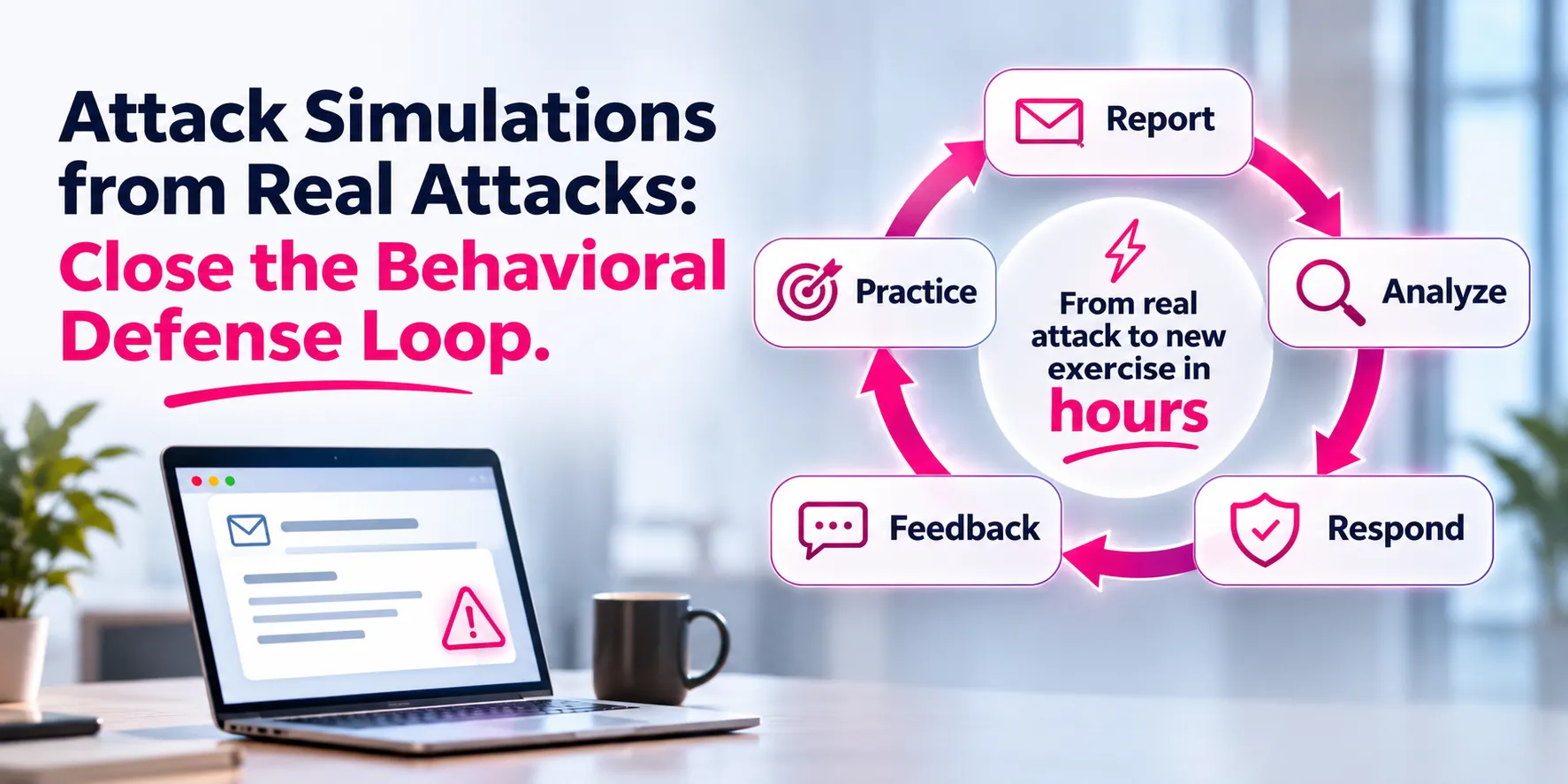
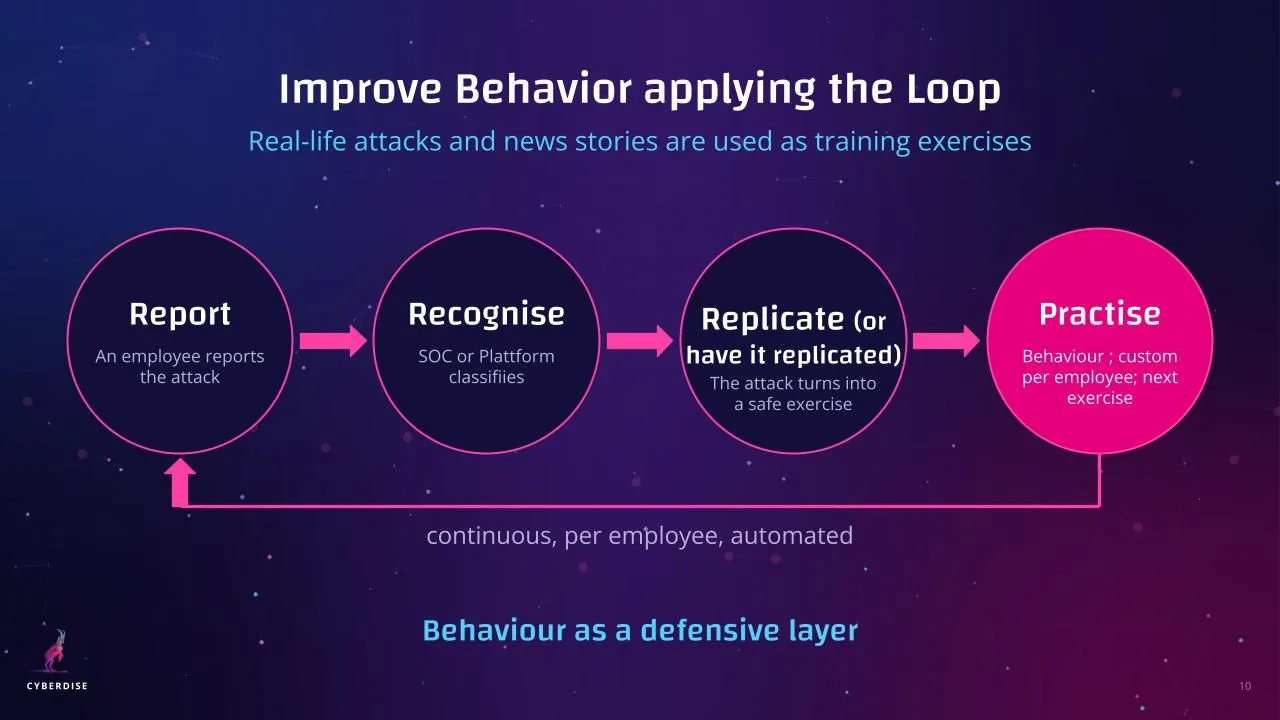
External intelligence also complements the attacks employees report inside your own organization. Together, they give the program a broader and more current basis for practice. We describe that internal path in Attack Simulations from Real Attacks: Close the Behavioral Defense Loop.

The #BerlinHack example makes the difference visible
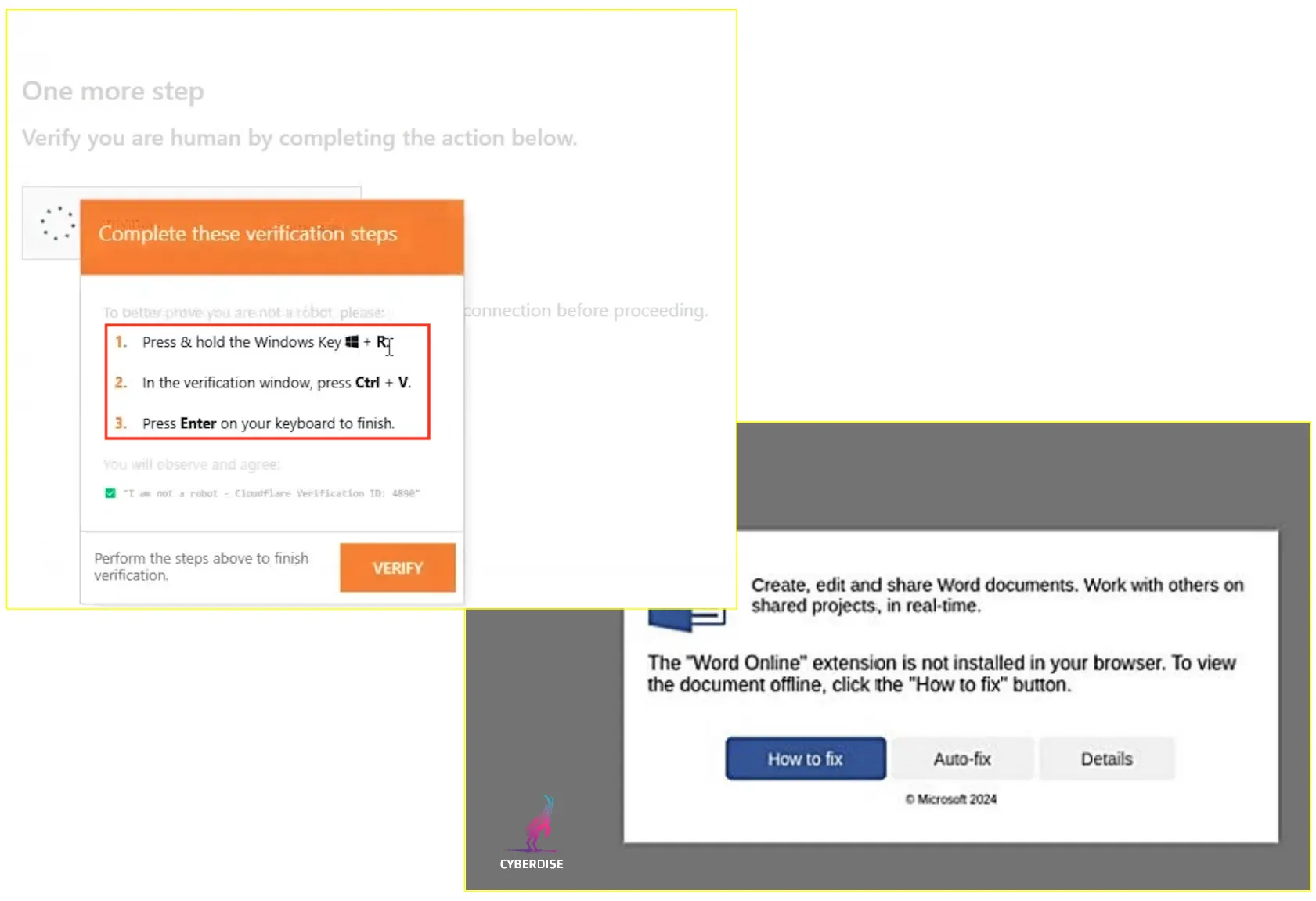
Our #BerlinHack simulation recreates a real-world ClickFix/TerminalFix attack: a routine document-review request leads to a fake security check that tricks employees into executing malicious commands. The exercise teaches them to recognize and report this manipulation safely.
Within just 48 hours, CYBERDISE made the reconstructed attack available as a downloadable simulation through its Attack Template Feed.
The objective is better decisions under realistic conditions
The goal is to rehearse the decisions people will need before a real attacker asks them to act. A more convincing simulation is useful when it develops a practical response:
Evaluate whether people avoid the risky action, report the attempt and apply the same checking habit when the next scenario changes. Compare exercises with similar audiences and difficulty; a lower click rate alone can also mean an easier exercise.
This is the purpose of Behavioral Defense Engineering (BDE): connect realistic practice, employee action and security operations. Employees contribute to the defense, and their responses help determine what should be practiced next.
Attackers already exploit context. Defenders should use it responsibly for protection. Combining educational Vulnerability Profiles with Social Engineering Radar and the Attack Template Feed helps reduce the attackers’ information advantage and turns current threats into opportunities to practice.